

How Telehealth Works With the Opioid Withdrawal Timeline

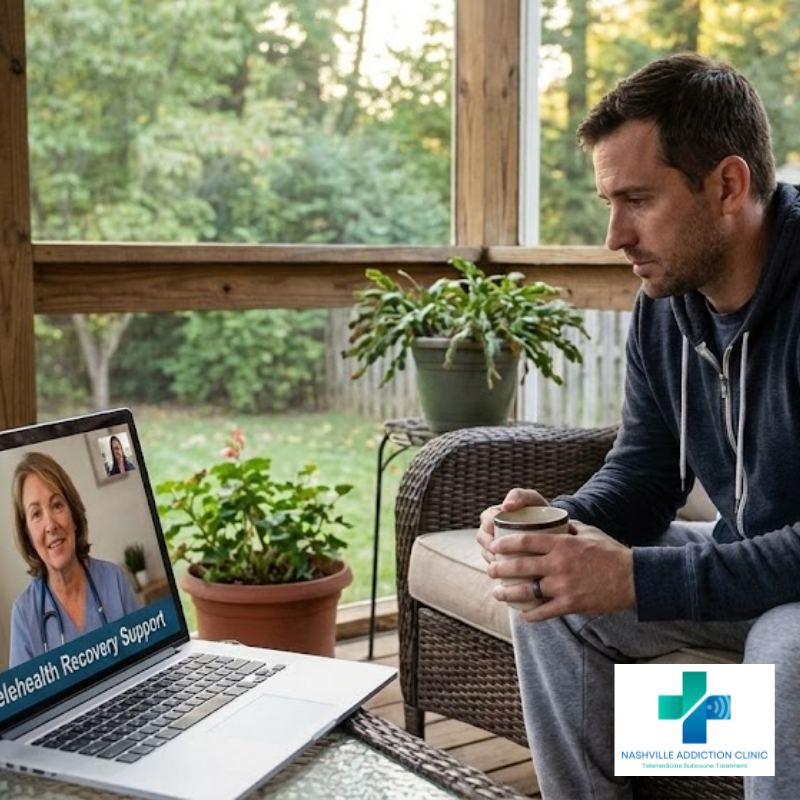
Understanding how telehealth works with the opioid withdrawal timeline can be the difference between staying stuck in addiction and finally finding relief. For many people in Tennessee, fear of withdrawal symptoms keeps them using opioids longer than they want to. Telehealth-based Suboxone treatment now allows patients to manage withdrawal safely, privately, and from home—often with same-day care.
At Nashville Addiction Clinic, we help patients across Tennessee navigate opioid withdrawal using secure telemedicine, evidence-based care, and compassionate support.
Accredited, Virtual Addiction Treatment for Tennessee
Nashville Addiction Clinic provides evidence-based Suboxone treatment through secure telemedicine, staffed by licensed Tennessee clinicians. No clinic visits required, ever.
- Statewide access across Tennessee
- Accredited by The Joint Commission
- Owned and managed by people in long-term recovery
Understanding the Opioid Withdrawal Timeline
Opioid withdrawal follows a fairly predictable pattern, though symptoms vary depending on the substance used, duration of use, and individual health factors.
Common Opioid Withdrawal Phases
Early Withdrawal (6–24 hours):
- Anxiety and restlessness
- Muscle aches
- Sweating
- Runny nose
- Insomnia
Peak Withdrawal (24–72 hours):
- Severe cravings
- Nausea and vomiting
- Diarrhea
- Chills and hot flashes
- Increased heart rate
Post-Acute Withdrawal (Days to Weeks):
- Fatigue
- Depression
- Sleep disturbances
- Lingering cravings
For people using fentanyl, heroin, oxycodone, hydrocodone, morphine, kratom, or street Suboxone, the opioid withdrawal timeline can feel overwhelming without medical support.
How Telehealth Fits Into the Opioid Withdrawal Timeline
Telehealth changes how opioid withdrawal is managed by allowing treatment to begin at the right moment—without traveling to a clinic.
Telehealth Allows Proper Timing for Suboxone
One of the most important parts of withdrawal treatment is timing. Suboxone (buprenorphine/naloxone) must be started once moderate withdrawal begins to avoid precipitated withdrawal.
Telehealth providers:
- Assess symptoms in real time via video
- Use standardized withdrawal scales
- Guide patients on when to take their first dose
- Monitor symptoms closely during induction
This approach allows patients in cities like Murfreesboro, Franklin, Jackson, Johnson City, and Bartlett, to start treatment safely from home.
What Happens During a Telehealth Suboxone Induction
Step-by-Step Telehealth Withdrawal Support
Step 1: Online Registration
- Register for Suboxone Telemedicine using TennCare Medicaid
- Register for virtual Suboxone treatment using commercial insurance
- Register for online Suboxone therapy as a self-pay patient
- Register as a returning patient
- Apply for our Sliding-Scale Program
- View all insurance plans we accept and self-pay pricing
- We accept most commercial/employee health plans, such as BCBS, Cigna, Ambetter, and United Healthcare, as well as all TennCare Medicaid insurance: Amerigroup Community Care, BlueCare, United Healthcare Community Plan, and Wellpoint Community Care.
Not sure if your insurance is accepted? Click here to verify your coverage.
Experience a safe transition from hydrocodone, oxycodone, OxyContin, heroin, fentanyl, methadone, morphine, Kratom, 7-OH (7-Hydroxy-opioids), Tramadol, Opana, codeine, oxymorphone, Tramadol, Percocet, and other opioids.
If you would like to speak to someone about our telemedicine Suboxone program, please call or text us at (615) 927-7802. You can also message us securely on the Spruce Health mobile app.
Step 2: Video Appointment
A licensed medical provider reviews:
- Opioid use history
- Current withdrawal symptoms
- Mental and physical health
Step 3: Guided Suboxone Start
Patients are instructed exactly when to take Suboxone based on their position in the opioid withdrawal timeline.
Step 4: Same-Day Prescription
Medication is sent to a local pharmacy or delivered overnight.
This process removes uncertainty and fear from withdrawal.
Why Telehealth Reduces Withdrawal Anxiety
Many people delay treatment because they fear:
- Being judged
- Experiencing intense withdrawal alone
- Taking Suboxone incorrectly
Telehealth addresses these concerns by providing:
- Private, judgment-free care
- Real-time medical guidance
- Same-day access to medication
- Ongoing follow-up support
Patients often report that knowing a provider is available dramatically reduces anxiety during withdrawal.
How Suboxone Changes the Withdrawal Timeline
Suboxone works by partially activating opioid receptors, which:
- Reduces cravings
- Relieves withdrawal symptoms
- Prevents euphoria from other opioids
When started correctly through telehealth, Suboxone can:
- Shorten the most intense phase of withdrawal
- Stabilize patients within hours to days
- Allow return to daily responsibilities
This is especially important for working adults, parents, and rural Tennesseans without reliable transportation.
Telehealth Safety and Medical Oversight
Telehealth Suboxone treatment is safe, regulated, and supported by national health authorities including the FDA, DEA, and SAMHSA.
Why Choose Nashville Addiction Clinic for Help with Opioid Withdrawal:
- Accredited by The Joint Commission
- Clinic owners are in long-term recovery
- Over 260 Google Reviews (from real patients)
- Recipient of Tennessee’s first Virtual OBOT medical license
- Same-day Suboxone prescriptions
- Statewide award winner of the 2025 Best of Tennessee award for substance abuse treatment
- Over 1000 patients served since 2019
- Accepts most commercial/employee health plans, such as Blue Cross Blue Shield (all U.S. states), Cigna, Ambetter, and United Healthcare, as well as all TennCare Medicaid plans: Amerigroup Community Care, BlueCare, United Healthcare Community Plan, and Wellpoint Community Care.
- Overnight Suboxone delivery is available in most areas (a delivery fee applies)
- A compassionate team of caring doctors, nurse practitioners, counselors, and administrators who provide judgement-free care, some who are in recovery.
- Same-day appointments available every Monday through Friday from 8:00 AM to 5:00 PM (based on availability)
- Evening appointments every Monday and Wednesday until 9:00 PM
Our helpful staff is happy to answer any questions you may have. Call us or send us a text at (615) 927-7802, or message us securely using the Spruce Health mobile app.
Feeling nervous about starting telemedicine addiction treatment? Learn what to expect during your first Suboxone telemedicine appointment.
Telemedicine does not mean reduced care—it means accessible care.
Who Benefits Most From Telehealth Withdrawal Care
Telehealth works especially well for people who:
- Fear opioid withdrawal
- Have used fentanyl or heroin
- Bought Suboxone on the street
- Lack transportation
- Need privacy
- Work full-time or care for children
Patients across Tennessee—from urban centers to rural communities—can receive the same level of care.
Frequently Asked Questions
Can I really manage opioid withdrawal through telehealth?
Yes. Telehealth providers monitor symptoms, guide Suboxone timing, and provide medical oversight throughout withdrawal.
What if I’m afraid of precipitated withdrawal?
Your provider will help you wait until the correct point in the opioid withdrawal timeline before starting medication.
Does telehealth work for fentanyl withdrawal?
Yes, but fentanyl often requires careful timing and monitoring, which telehealth providers are trained to manage.
Will my employer know I’m getting treatment?
No. Telehealth addiction treatment is private and protected by medical confidentiality laws.
Is Suboxone safe?
Suboxone is FDA-approved and widely used to treat opioid use disorder safely and effectively.
Fast Telehealth for Opioid Withdrawal
- TennCare Medicaid addiction treatment coverage
- Commercial insurance Suboxone program acceptance
- A payment plan for self-pay telemedicine Suboxone
- A sliding-scale program for eligible patients
You can review insurance and pricing details before scheduling, so there are no surprises.
If you have TennCare Medicaid insurance, your treatment and medication costs are typically $0. If you have commercial health insurance, we will provide you with a treatment cost estimate before scheduling your first telemedicine appointment. If you don’t have health insurance, we offer biweekly and monthly payment plans.
Get Relief Today from Opioid Withdrawal Using Telehealth
Register for treatment online using your TennCare Medicaid, commercial insurance, or choose a payment plan. (A sliding-scale program is also available) Click here if you’re a returning patient.
Related Articles
- Understanding the Kratom Withdrawal Timeline: What Tennessee Residents Need to Know
- Kratom Withdrawal Symptoms Day by Day | Nashville Addiction Clinic
- Suboxone via Telehealth: Trusted Online Addiction Treatment in Tennessee
External Resources
- Kratom/7-OH/7-hydroxymitragynine addiction is another opioid addiction-related issue facing Tennessean’s, thanks to it being readily available and unregulated. Learn more about Kratom addiction and virtual treatment options in Tennessee.
- DEA.gov – Opioid Addiction Resources
- Substance Abuse and Mental Health Services Administration (SAMHSA)
- Centers for Disease Control and Prevention | CDC.gov
- National Institute on Drug Abuse
- National Center on Substance Abuse and Child Welfare