

How to Treat Kratom 7-OH Addiction With Suboxone: A Safer Path to Recovery

If you’re searching for how to treat kratom, 7-OH, and 7-Hydroxymitragynine addiction with Suboxone, you’re not alone. Many people in Tennessee begin using kratom to cope with pain, anxiety, or opioid withdrawal—only to find themselves dependent, experiencing uncomfortable symptoms, and unsure how to stop safely. Because kratom is often marketed as “natural,” its risks are widely misunderstood.
At Nashville Addiction Clinic, we help patients across Tennessee safely transition off kratom using evidence-based treatments like Suboxone through private, 100% virtual telemedicine care.
Addiction Treatment for Tennessee by Tennesseans in Recovery
Nashville Addiction Clinic provides evidence-based Suboxone treatment through secure telemedicine, staffed by licensed Tennessee clinicians. No clinic visits required, ever.
- Statewide access across Tennessee
- Accredited by The Joint Commission
- Owned and managed by people in long-term recovery
Understanding Kratom / 7-Hydroxymitragynine Addiction and Dependence
Kratom is a plant-based substance that acts on opioid receptors in the brain. While some people initially experience pain relief or mood elevation, regular use can quickly lead to physical dependence and addiction.
Common signs of kratom addiction include:
- Needing larger doses to feel the same effects
- Withdrawal symptoms when trying to stop
- Daily or frequent dosing to feel “normal”
- Anxiety, depression, or irritability between doses
- Trouble at work, home, or in relationships
Despite being legal in many areas, kratom can cause withdrawal symptoms similar to opioids, especially with long-term or high-dose use.
Kratom’s Many Street Names
Kratom, 7-OH, and 7-Hydroxymitragynine have many nicknames on the street. If you have a family member of friend mentioning any of the names below, they are likely referring to some form Kratom/7-OH/7-.
- Hydro
- Thang
- Kakuam
- Ketum
- Herbal speedball
- Biak
- Maeng Da
- Thom
“Kratom” May Refer to Many Different Chemical Compounds
Kratom (Mitragyna speciosa) contains over 50 identified alkaloids, primarily mitragynine and 7-hydroxymitragynine, which account for most of its psychoactive effects. These compounds act as partial agonists at μ-opioid receptors while also interacting with adrenergic, serotonin, and dopamine pathways. It’s Kratom’s interaction with the μ-opioid receptors that make Suboxone so effective in treating Kratom/7-OH addiction and helping eliminate withdrawals and cravings.
Other alkaloids including speciogynine, paynantheine, speciociliatine, mitraciliatine, and corynantheidine, contribute to Kratom’s stimulant, sedative, muscle-relaxant, and analgesic properties, as well as its highly variable clinical effects and dependence potential.
The most common compounds include:
- Mitragynine: The most abundant active alkaloid, acting as a partial opioid agonist and interacting with various brain receptors.
- 7-Hydroxymitragynine (7-HMG): A powerful, though less abundant, opioid agonist, often considered more potent than mitragynine.
- Speciociliatine: Another important alkaloid found in significant amounts.
- Paynantheine: Contributes to kratom’s overall effects.
- Corynantheidine: An alkaloid that can block opioid receptors.
- Mitraphylline: An alkaloid with potential anti-inflammatory properties.
- Speciogynine, Mitralactonal, Rhynchophylline, Raubasine, and Mitragynaline: Other identified alkaloids.
Kratom/7-OH/7-hydroxymitragynine Withdrawal: Why Quitting Can Be Difficult
Kratom 7-OH withdrawal can be both physical and psychological. Symptoms may include:
- Muscle aches and restlessness
- Nausea, vomiting, or diarrhea
- Insomnia and fatigue
- Anxiety, panic, or depression
- Intense cravings
For people in cities like Spring Hill, Gallatin, Centerville, Cleveland, Brentwood, or Columbia, lack of local treatment options often leads them to keep using kratom just to avoid withdrawal—not because they want to.
This is where medical treatment can make a major difference.
How to Treat Kratom/7-OH/7-hydroxymitragynine Addiction With Suboxone
One of the most effective answers to how to treat kratom addiction with Suboxone is medically supervised medication-assisted treatment (MAT).
Suboxone contains buprenorphine, a partial opioid agonist that:
- Reduces withdrawal symptoms
- Controls cravings
- Stabilizes brain chemistry
- Prevents the cycle of repeated relapse
Although kratom is not a traditional opioid, it acts on the same receptors. Under medical supervision, Suboxone can be used to help patients safely stop kratom use and regain stability.
Treatment decisions are always individualized. A licensed provider evaluates your kratom use, symptoms, and overall health before starting Suboxone.
Starting Suboxone for Kratom/7-OH/7-hydroxymitragynine Addiction via Telemedicine
Step 1: Online Registration
You’ll begin by registering online with Nashville Addiction Clinic. We offer options for:
- Register for Suboxone Telemedicine using TennCare Medicaid
- Register for virtual Suboxone treatment using commercial insurance
- Register for online Suboxone therapy as a self-pay patient
- Register as a returning patient
- Apply for our Sliding-Scale Program
- View all insurance plans we accept and self-pay pricing
- We accept most commercial/employee health plans, such as BCBS, Cigna, Ambetter, and United Healthcare, as well as all TennCare Medicaid insurance: Amerigroup Community Care, BlueCare, United Healthcare Community Plan, and Wellpoint Community Care.
Not sure if your insurance is accepted? Click here to verify your coverage.
Experience a safe transition from hydrocodone, oxycodone, OxyContin, heroin, fentanyl, methadone, morphine, Kratom, 7-OH (7-Hydroxy-opioids), Tramadol, Opana, codeine, oxymorphone, Tramadol, Percocet, and other opioids.
If you would like to speak to someone about our telemedicine Suboxone program, please call or text us at (615) 927-7802. You can also message us securely on the Spruce Health mobile app.
Registration is confidential and takes only a few minutes.
Step 2: Virtual Medical Evaluation
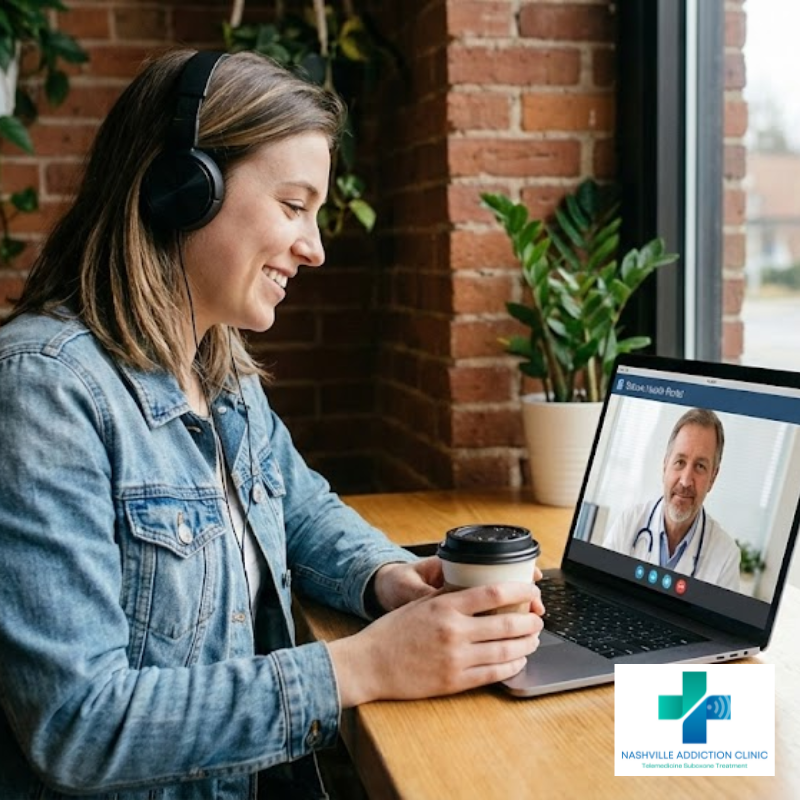
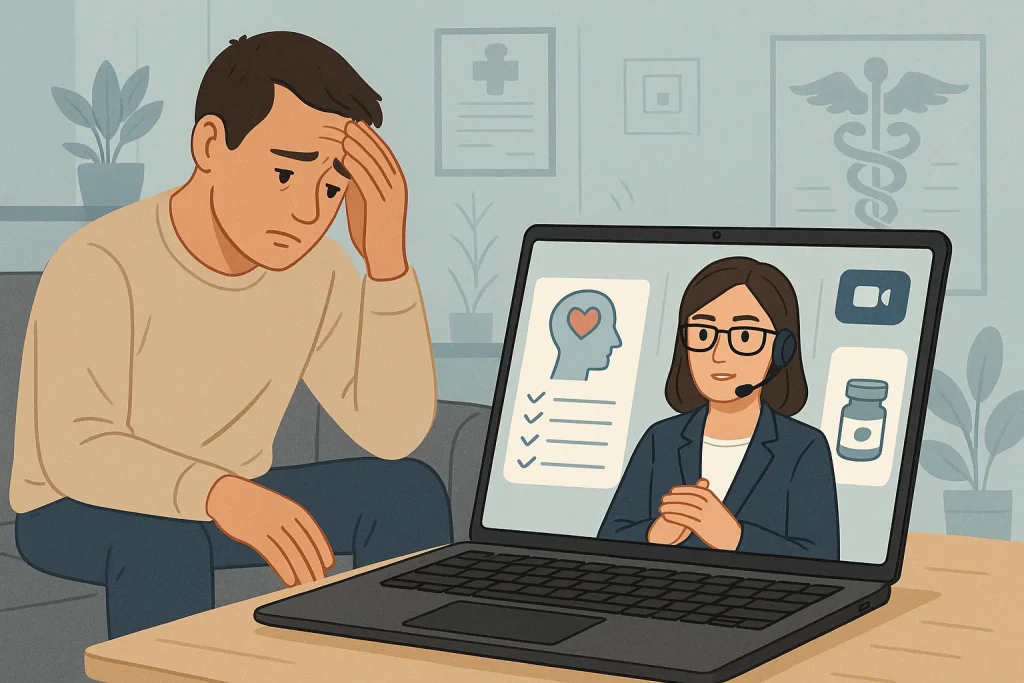
Your video appointment is conducted privately from home. During this visit, your provider will:
- Review your kratom use history
- Assess withdrawal symptoms
- Explain how Suboxone works
- Answer questions and address concerns
No in-person visit is required.
Step 3: Transitioning Safely With Suboxone
If Suboxone is appropriate, your provider will give clear guidance on timing your first dose to avoid unnecessary discomfort. Many patients receive same-day prescriptions, sent to a local pharmacy or delivered overnight.
Suboxone is also commonly used to help people transition from:
- Hydrocodone
- Oxycodone or Percocet
- Morphine or codeine
- Heroin or fentanyl
- Methadone
- Kratom and 7-OH
Why Suboxone Is Safer Than Quitting Kratom Cold Turkey
Trying to quit kratom without medical support often leads to relapse due to withdrawal discomfort. Suboxone offers a safer, more stable alternative.
Benefits include:
- Reduced withdrawal severity
- Fewer cravings
- Improved sleep and mood
- Ability to function at work and home
- Lower risk of returning to uncontrolled substance use
Federal agencies like the FDA and SAMHSA recognize medication-assisted treatment as the gold standard for opioid-related disorders, including kratom dependence when clinically appropriate.
Why Choose Nashville Addiction Clinic for Kratom Treatment?
Nashville Addiction Clinic is a trusted leader in virtual addiction treatment across Tennessee.
Our strengths
- Accredited by The Joint Commission
- Clinic owners are in long-term recovery
- Over 260 Google Reviews (from real patients)
- Recipient of Tennessee’s first Virtual OBOT medical license
- Same-day Suboxone prescriptions
- Statewide award winner of the 2025 Best of Tennessee award for substance abuse treatment
- Over 1000 patients served since 2019
- Accepts most commercial/employee health plans, such as Blue Cross Blue Shield (all U.S. states), Cigna, Ambetter, and United Healthcare, as well as all TennCare Medicaid plans: Amerigroup Community Care, BlueCare, United Healthcare Community Plan, and Wellpoint Community Care.
- Overnight Suboxone delivery is available in most areas (a delivery fee applies)
- A compassionate team of caring doctors, nurse practitioners, counselors, and administrators who provide judgement-free care, some who are in recovery.
- Same-day appointments available every Monday through Friday from 8:00 AM to 5:00 PM (based on availability)
- Evening appointments every Monday and Wednesday until 9:00 PM
Our helpful staff is happy to answer any questions you may have. Call us or send us a text at (615) 927-7802, or message us securely using the Spruce Health mobile app.
Feeling nervous about starting telemedicine addiction treatment? Learn what to expect during your first Suboxone telemedicine appointment.
You can also read our five-star patient reviews to see how others have safely reclaimed their lives.
We believe treatment should be accessible—not another source of stress. Nashville Addiction Clinic offers:
- TennCare Medicaid coverage
- Commercial insurance acceptance
- Self-pay options
- A sliding-scale Suboxone program for qualifying patients
Our team explains costs clearly before treatment begins.
Frequently Asked Questions About Treating Kratom 7-OH Addiction with Suboxone
1. Can Suboxone be used to treat kratom or 7-OH addiction?
Yes. Suboxone is commonly used to treat dependence on kratom and 7-hydroxymitragynine (7-OH). Because these substances act on opioid receptors, Suboxone can help stabilize the brain and reduce withdrawal symptoms.
2. How does Suboxone work for 7-OH addiction?
Suboxone contains buprenorphine, which partially activates opioid receptors. This helps relieve withdrawal symptoms and cravings without producing the same high as full opioids, making it easier to stop using 7-OH.
3. When should you start Suboxone after stopping kratom or 7-OH?
Suboxone should be started once mild-to-moderate withdrawal symptoms begin—typically 12–24 hours after the last use. Starting too early can trigger precipitated withdrawal.
4. What is precipitated withdrawal and how can it be avoided?
Precipitated withdrawal happens when Suboxone displaces other substances from opioid receptors too soon. To avoid this, patients should wait until clear withdrawal symptoms are present before starting treatment.
5. What dose of Suboxone is used for kratom or 7-OH addiction?
Dosing varies depending on severity of use, but treatment typically starts with a low dose and is adjusted based on symptoms. A healthcare provider will determine the safest and most effective dose.
6. How quickly does Suboxone relieve kratom withdrawal symptoms?
Many patients begin to feel relief within 30–60 minutes after the first dose. Symptoms like anxiety, body aches, and cravings often improve significantly within the first day.
7. How long do you need to stay on Suboxone for kratom addiction?
Treatment length varies. Some people use it short-term to get through withdrawal, while others stay on it longer to maintain stability and prevent relapse.
8. Is Suboxone replacing one addiction with another?
No. Suboxone is a medically supervised treatment that stabilizes brain chemistry. It does not produce the same euphoric effects and is used to support recovery, not create a new addiction.
9. Can you start Suboxone treatment through telemedicine?
Yes. Many providers offer fully virtual appointments, allowing patients to start treatment quickly and safely from home, often with same-day access to care.
Take the Next Step Toward Freedom From Kratom Withdrawals and. Cravings
If you’re struggling and searching for how to treat kratom addiction with Suboxone, confidential help is available right now. You don’t have to manage withdrawal or cravings on your own.
Register for:
- TennCare Medicaid addiction treatment coverage
- Commercial insurance Suboxone program acceptance
- A payment plan for self-pay telemedicine Suboxone
- A sliding-scale program for eligible patients
You can review insurance and pricing details before scheduling, so there are no surprises.
If you have TennCare Medicaid insurance, your treatment and medication costs are typically $0. If you have commercial health insurance, we will provide you with a treatment cost estimate before scheduling your first telemedicine appointment. If you don’t have health insurance, we offer biweekly and monthly payment plans.
Recovery from kratom addiction is possible—and it can start today.
Related Articles
- Suboxone Treats 7-OH and Kratom Withdrawal: A Safer Path to Recovery in Tennessee
- 7-OH Addiction Treatment in Tennessee: Safe, Virtual Recovery with Suboxone
- Kratom Withdrawal: Safe, Virtual Recovery Options in Tennessee
- Kratom 7-OH Recovery: Your Path to Safe, Virtual Opioid Treatment
External Resources
- Kratom/7-OH/7-hydroxymitragynine addiction is another opioid addiction-related issue facing Tennessean’s, thanks to it being readily available and unregulated. Learn more about Kratom addiction and virtual treatment options in Tennessee.
- DEA.gov – Opioid Addiction Resources
- Substance Abuse and Mental Health Services Administration (SAMHSA)
- Centers for Disease Control and Prevention | CDC.gov
- National Institute on Drug Abuse
- National Center on Substance Abuse and Child Welfare
“`html id=”kr7ohsubfaq”
“`