

7-Hydroxymitragynine Withdrawal: A Safe Path to Recovery in Tennessee


Experiencing 7-hydroxymitragynine withdrawal can feel overwhelming, but you are not alone. Nashville Addiction Clinic has helped more than 1,000 Tennesseans—ages 18 to 65—find freedom from opioids and kratom-related substances through our pioneering TeleMAT (telemedicine medication-assisted treatment) program.
What Is 7-Hydroxymitragynine and Why Is Withdrawal Serious?
7-hydroxymitragynine (7-OH) is a potent alkaloid found in kratom, acting on the same brain receptors as opioids. Regular use can lead to dependence, and sudden discontinuation may cause withdrawal symptoms similar to heroin or prescription painkillers. According to the FDA, kratom and its compounds carry real risks, including overdose and death when combined with other substances. The DEA also warns about kratom’s addictive potential.
Common 7-Hydroxymitragynine Withdrawal Symptoms
- Muscle aches, chills, and sweating
- Insomnia and restless legs
- Anxiety, irritability, and depression
- Nausea, vomiting, and diarrhea
Untreated withdrawal can lead to relapse and dangerous drug use.
Why Choose Nashville Addiction Clinic
We are Tennessee’s first clinic to receive a virtual medical license for addiction treatment. For over six years, our Joint Commission–accredited team has delivered life-changing care. Highlights include:
- Same-day Suboxone prescriptions sent to your pharmacy or delivered overnight.
- Master’s-level counselors and a staff of experienced clinicians—many in active recovery themselves.
- Over 100 five-star Google reviews from patients across Nashville, Memphis, Knoxville, Chattanooga, and Clarksville.
- A compassionate environment created by founders who once experienced stigma and vowed to treat every patient with respect.
Read our patient reviews to see how lives change with kindness and expert care.
How TeleMAT Works
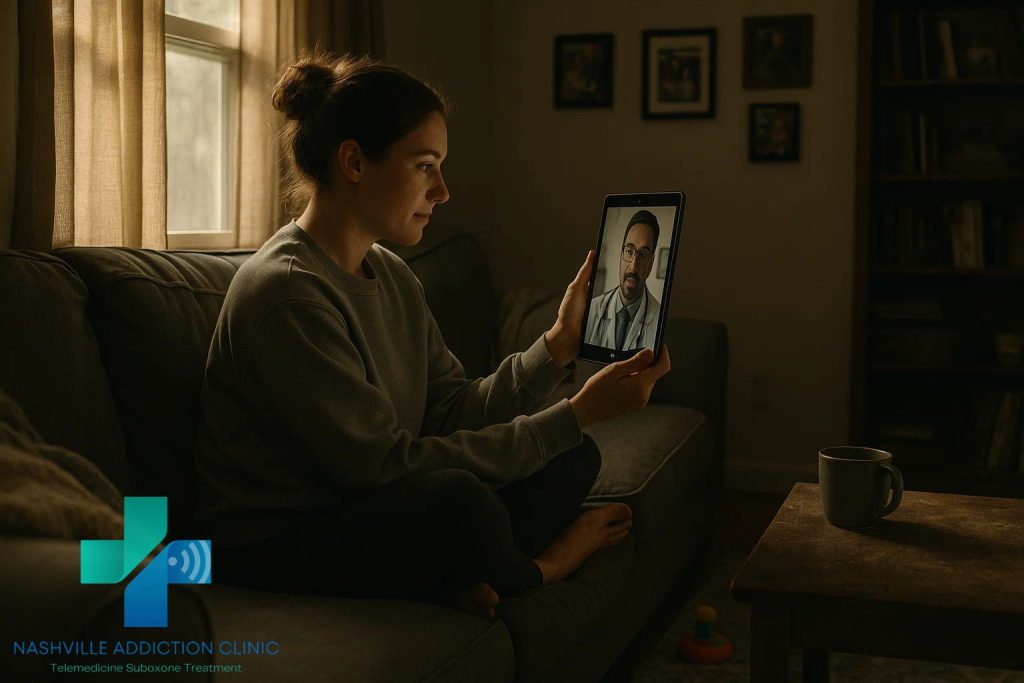
Our TeleMAT program makes recovery possible even if you lack transportation or live in rural areas like Cookeville or Jackson.
- Register online using:
- Meet virtually with a Suboxone-certified provider on your phone or computer.
- Receive your prescription the same day, with follow-ups via the secure Spruce Health app.
Need help? Call or text (615) 927-7802 anytime.
Benefits of Suboxone for 7-Hydroxymitragynine Withdrawal
- Rapidly eliminates cravings and withdrawal symptoms.
- Proven by SAMHSA to reduce overdose risk.
- Allows you to focus on counseling and long-term recovery rather than chasing pills.
Financial Options
We accept commercial insurance, TennCare, and offer a sliding-scale program for self-pay patients. View full insurance and pricing details.
Frequently Asked Questions About 7-Hydroxymitragynine Withdrawal
1. What is 7-hydroxymitragynine withdrawal?
7-hydroxymitragynine (7-OH) withdrawal refers to the physical and psychological symptoms that occur when someone stops using products containing this potent kratom alkaloid. Because 7-OH acts on opioid receptors, withdrawal can feel similar to mild-to-moderate opioid withdrawal.
2. How long does 7-hydroxymitragynine withdrawal last?
Withdrawal symptoms typically begin within 12–24 hours after the last dose. Most people experience peak symptoms between days 2–4, with improvement over 5–7 days. However, cravings and mood symptoms can last longer depending on usage patterns.
3. What are the symptoms of 7-OH withdrawal?
Common symptoms include:
- Muscle aches and body pain
- Anxiety or irritability
- Insomnia
- Sweating and chills
- Nausea or stomach discomfort
- Strong cravings
These symptoms can vary in intensity depending on how often and how much 7-OH was used.
4. Is 7-hydroxymitragynine withdrawal worse than regular kratom withdrawal?
Yes, many people report that 7-OH withdrawal is more intense than traditional kratom withdrawal. This is because 7-OH is significantly more potent and binds more strongly to opioid receptors.
5. Can 7-OH withdrawal feel like opioid withdrawal?
Yes. Because 7-hydroxymitragynine acts similarly to opioids in the brain, withdrawal symptoms can closely resemble those seen with opioid dependence, including restlessness, flu-like symptoms, and cravings.
6. Is it safe to quit 7-hydroxymitragynine cold turkey?
While not typically life-threatening, quitting suddenly can be very uncomfortable and difficult to manage alone. Many people relapse due to the intensity of symptoms, so medical support can improve comfort and success rates.
7. Can Suboxone help with 7-hydroxymitragynine withdrawal?
Yes. Suboxone (buprenorphine/naloxone) can help reduce withdrawal symptoms and cravings by stabilizing opioid receptors. When started at the right time, it can make the transition off 7-OH significantly more manageable.
8. When should you start treatment after stopping 7-OH?
Treatment with medications like Suboxone should begin once mild-to-moderate withdrawal symptoms start. Starting too early can cause precipitated withdrawal, so timing is important.
9. Why do people struggle to quit 7-hydroxymitragynine?
7-OH can create both physical dependence and psychological cravings. Its short duration of action often leads to frequent dosing, which reinforces the cycle of dependence and makes quitting more challenging.
10. What is the best way to stop using 7-hydroxymitragynine?
The most effective approach is a medically supervised plan that may include medication-assisted treatment, support, and structured care. This reduces withdrawal symptoms, lowers relapse risk, and improves long-term recovery outcomes.
Start Recovery Today
Whether you’re in Nashville, Murfreesboro, or a small rural town, help is just a phone call away. Meet our team and see how compassion and experience can guide your recovery.
Related Articles
- MAT Treatment: Your Path to Virtual Opioid Recovery in Tennessee
- Suboxone Treatment From Home: Steps to Get Started
- How to Quit Kratom: A Tennessee Guide to Recovery
- Online Suboxone Clinic: Tennessee’s Trusted Virtual Addiction Care
External Resources
- FDA: Kratom and 7-Hydroxymitragynine Risks
- DEA: Kratom Fact Sheet
- SAMHSA: Medication-Assisted Treatment
- National Institute on Drug Abuse
- Centers for Disease Control and Prevention | CDC.gov
- National Center on Substance Abuse and Child Welfare
- Locate a Peer Recovery Support Specialist
- Tennessee Department of Health Drug Overdose Dashboard