

Can Suboxone Be Abused? Straight Answers from Nashville Addiction Clinic

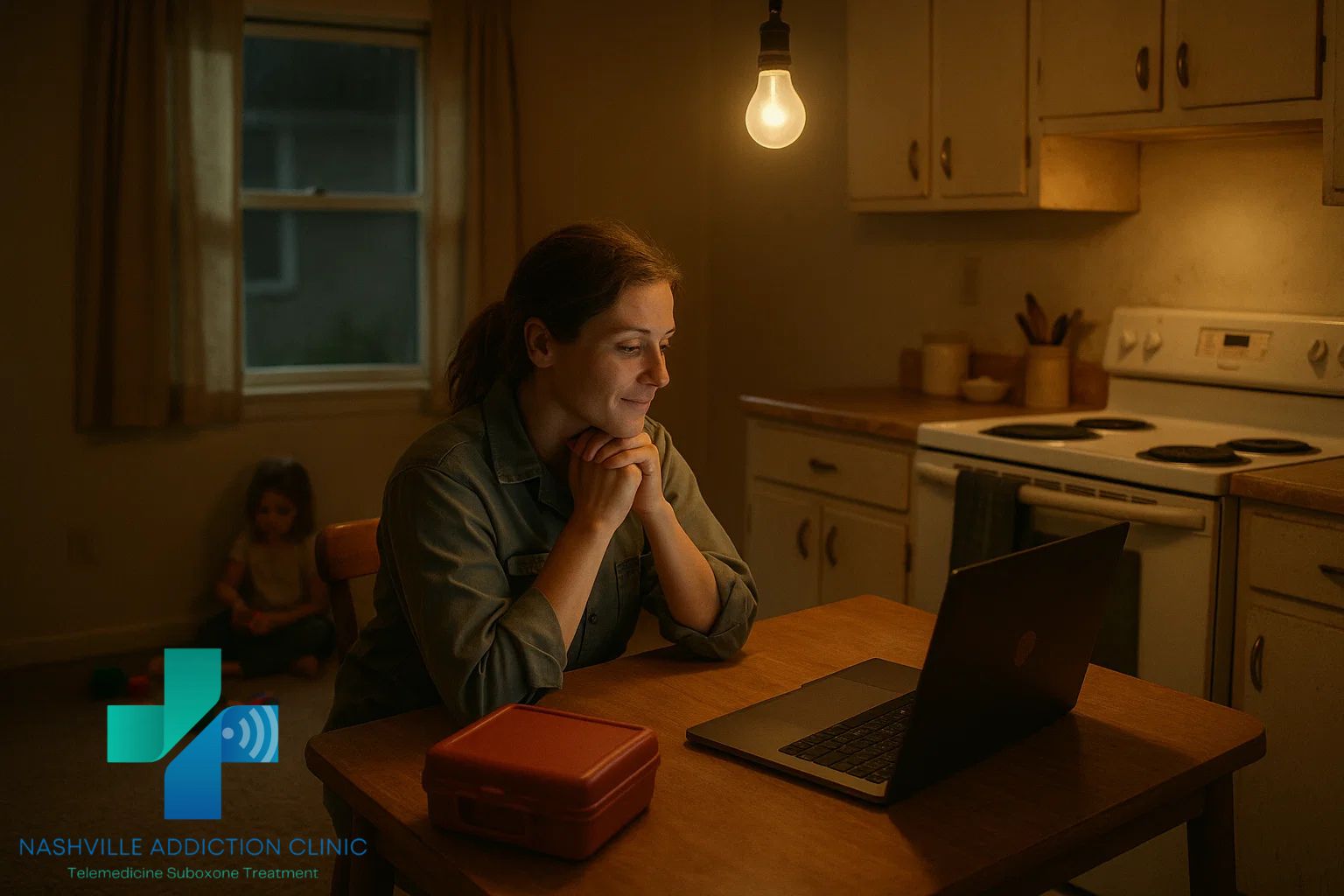
If you’ve wondered “can Suboxone be abused,” you’re not alone. At Nashville Addiction Clinic we encounter men and women, aged 18 to 65, from places like Nashville, Chattanooga, Knoxville, Memphis and even small towns in Tennessee, who’ve asked this exact question. You may be currently battling opioid addiction from surgery, pain-management, upbringing, friends or family influence—or perhaps you’re hiding the fact you’ve bought Suboxone on the street, chasing pills, trying to stay stable. You’re tired of it. You may have TennCare Medicaid or commercial insurance, maybe you lack reliable transportation—so a virtual TeleMAT option matters. You need straight answers about whether Suboxone can be abused—and how our telemedicine program can help you get free.
In this article we’ll explain: can Suboxone be abused, how it happens, why it’s rare but possible, what’s the safe path and how our TeleMAT model (online Suboxone plus counseling) works.
What is Suboxone and how does it work?
To answer “can Suboxone be abused,” you must understand what it is.
- Suboxone is a medication composed of two active ingredients: Buprenorphine (a partial opioid agonist) and Naloxone (an opioid antagonist).
- The medication is FDA-approved for opioid use disorder (OUD) treatment.
- Buprenorphine works by binding to opioid receptors, reducing cravings and withdrawal from full opioids (heroin, fentanyl, oxycodone, etc) while naloxone is included to discourage injecting the medication because it would trigger withdrawal.
- The official label for Suboxone notes it must be used as part of a complete treatment plan including counseling and psychosocial support.
In short: Suboxone is meant to stabilize you, not get you high, and make opioid use disorder manageable.
Accredited, Virtual Addiction Treatment for Tennessee
Nashville Addiction Clinic provides evidence-based Suboxone treatment through secure telemedicine, staffed by licensed Tennessee clinicians. No clinic visits required, ever.
- Statewide access across Tennessee
- Accredited by The Joint Commission
- Owned and managed by people in long-term recovery
Register for treatment online using your TennCare Medicaid, commercial insurance, or choose a payment plan. (A sliding-scale program is also available) Click here if you’re a returning patient.
Can Suboxone be abused? Yes—with caveats
The answer to “can Suboxone be abused”
Yes, it can be abused—but the reality is more nuanced. Suboxone is less prone to abuse compared to full opioid agonists like heroin or fentanyl, but misuse/diversion does occur.
- A Department of Justice report says: “Like methadone… buprenorphine is susceptible to abuse.”
- One review noted an increase in buprenorphine misuse/diversion in many countries.
- According to American Addiction Centers, while misuse and addiction with Suboxone are “rare,” they are possible.
How abuse typically happens
Abuse or misuse of Suboxone often doesn’t look like classic “get-high” abuse; sometimes it’s used to prevent withdrawal or substitute for other opioids. Examples:
- Someone buys Suboxone on the street instead of heroin or oxycodone, simply to avoid withdrawal symptoms.
- Someone takes higher doses, injects, or uses it in non‐prescribed ways. The naloxone is designed to discourage this, but it still happens.
- A study found that many using illicit buprenorphine did so to manage withdrawal—not always to get high.
Why abuse is less likely than with other opioids
- Buprenorphine’s ceiling effect: after a certain dose you don’t get the same “high” effect as full-agonist opioids.
- The inclusion of naloxone mostly blocks misuse when injected or misused.
- Label warns of overdose risk in opioid-naïve individuals, reinforcing that misuse is risky.
Signs and risks of Suboxone abuse
Signs you or someone may be misusing Suboxone
- Secretively buying or using Suboxone outside of prescription channels.
- Taking more than prescribed, taking more often.
- Injecting or snorting film or tablet rather than using sublingually.
- Using Suboxone as a “maintenance” street drug rather than with a treatment plan.
- Experiencing withdrawal or other dysfunction (even while using) because the medication is misused.
Risks and consequences
- Even though overdose from Suboxone is rare, it is possible—especially without opioid tolerance, or when combined with other depressants.
- Misuse may lead to continued addiction, diversion, legal issues (buying on street), and undermined treatment.
- Doctors’ labels warn about precipitated withdrawal if Suboxone is used too early when another opioid is still active.
Why understanding this matters for you
If you’ve been addicted to heroin, fentanyl, oxycodone, OxyContin, hydrocodone, or other opioids (or even Kratom, 7-OH, morphine, codeine) and you’re doing the rat-race of chasing pills or dragging into job, career, family trauma—knowing the truth about Suboxone helps you make the informed decision: it’s a tool for recovery, not another pitfall.
Tired of Visiting Clinics and Pharmacies? You Don’t Have to Anymore
We know the frustrations and stigmas often associated with addiction treatment, as well as the time it takes to visit a clinic, sit in a waiting room with people you don’t know, wondering if you’re being judged, watching the clock in hopes of leaving within a few hours. Sadly, your day doesn’t end there. You then have to drive to a pharmacy to pick up your Suboxone medications, which can sometimes be met with judgement, stigma, embarrassment, and even rejection.
By utilizing our Suboxone telemedicine program and overnight medication delivery pharmacy partner, you’ll never have to visit a clinic or pharmacy again.
Why treatment (not just medication) matters
Remember that abuse of Suboxone doesn’t happen in isolation—it usually happens when medication is used without proper support. The label of Suboxone emphasises it must be part of a complete treatment plan including counseling.
At Nashville Addiction Clinic we emphasise three keys to life-long recovery:
- Medication-assisted treatment (MAT) using Suboxone
- Master’s-level counseling and behavioral support
- A caring, non-judgemental clinical team that understands opioid addiction
Without the second and third elements, just having a pill—even Suboxone—can leave you vulnerable.
Our TeleMAT solution: Convenient, respectful, effective
If you live in Tennessee (Centerville, Cleveland, Brentwood, Columbia, Cookeville, LaVergne) and you’re worried about transportation, low-income household, TennCare Medicaid or commercial insurance, or you’re hiding your addiction from co-workers, family or partner—our virtual model works for you. Here’s how:
- Accredited by The Joint Commission
- Our clinic owners are in long-term recovery
- Over 260 Google Reviews (from real patients)
- Recipient of Tennessee’s first Virtual OBOT medical license
- Same-day Suboxone prescriptions
- Statewide award winner of the 2025 Best of Tennessee award for substance abuse treatment
- Over 1000 patients served since 2019
- Accepts most commercial/employee health plans, such as Blue Cross Blue Shield (all U.S. states), Cigna, Ambetter, and United Healthcare, as well as all TennCare Medicaid plans: Amerigroup Community Care, BlueCare, United Healthcare Community Plan, and Wellpoint Community Care.
- Overnight Suboxone delivery is available in most areas (a delivery fee applies)
- A compassionate team of caring doctors, nurse practitioners, counselors, and administrators who provide judgement-free care, some who are in recovery.
- Same-day appointments available every Monday through Friday from 8:00 AM to 5:00 PM (based on availability)
- Evening appointments every Monday and Wednesday until 9:00 PM
Our helpful staff is happy to answer any questions you may have. Call us or send us a text at (615) 927-7802, or message us securely using the Spruce Health mobile app.
Feeling nervous about starting telemedicine addiction treatment? Learn what to expect during your first Suboxone telemedicine appointment.
Insurance & payment options
- For commercial health insurance users: Register for virtual addiction treatment using commercial health insurance
- For TennCare Medicaid participants: Register for online Suboxone treatment using TennCare Medicaid
- For self-pay or sliding scale: Register for self-pay online addiction treatment and Apply for our Sliding-Scale Program
- See insurance & pricing: View insurance and pricing
- Meet our team: Meet our kind, supportive, non-judgemental staff
- Returning patients: Register as a returning patient
- Read the reviews: Read our over 250 five-star patient reviews on Google
This means you can stay home in Knoxville, Chattanooga, or even rural Tennessee, skip the commute, avoid stigma—and get real help.
FAQ – Can Suboxone be abused?
Frequently asked questions
Q1: Can Suboxone really get you high?
A: While misuse is possible, Suboxone has a much lower risk of euphoria compared to full-agonist opioids. The naloxone component and buprenorphine’s partial-agonist nature reduce its “high” potential.
Q2: If I bought Suboxone on the street, is that safe?
A: No. Street-purchased Suboxone is unmonitored, you don’t know dose, quality, whether it’s counterfeit or mixed with other drugs. That’s dangerous.
Q3: How do I know I’m using Suboxone correctly to avoid abuse?
A: Use exactly as prescribed by a qualified clinician, take it sublingually (not injected), combine with counseling and support, and follow the treatment plan created for you.
Q4: I’ve been addicted to oxycodone, fentanyl, heroin—can Suboxone still work for me?
A: Yes. At Nashville Addiction Clinic we help people transition from full opioid agonists (heroin, fentanyl, oxycodone/OxyContin, hydrocodone, morphine, codeine, Kratom, 7-OH, etc). Suboxone can virtually eliminate opioid withdrawal and cravings when used correctly with the right induction and support.
Q5: If Suboxone can be abused, why should I take it?
A: Because the evidence shows Suboxone, when prescribed in a comprehensive treatment plan, dramatically reduces overdose risk, helps stabilize your life, and gives you a chance to rebuild job, career, family—without chasing pills.
Q6: Will I have to go into a clinic every day?
A: No. With our TeleMAT model you don’t. From your mobile device you meet your clinician, get the prescription, and continue counseling—all virtually.
Q7: What about relapse risk or overdose while on Suboxone?
A: While overdose on Suboxone alone is very rare, the bigger risk is returning to full opioids. The official label warns that relapse in patients on Suboxone puts them at risk for opioid overdose. That’s why support and a treatment plan matter.
Why our clinic in Tennessee is different
Living in Tennessee (whether Nashville, Johnson City, Chattanooga, Memphis or rural counties) means you may face unique challenges: Medicaid coverage via TennCare, limited transport, work/family stress, past legal issues, the stigma of addiction, fear of withdrawal, the trap of going from pills to heroin or fentanyl. Our program is built for you:
- Our virtual license means anyone who lives in Tennessee can now receive treatment – without ever leaving home or visiting a pharmacy—no travel required, ever.
- Our counseling team each have their Master’s degree. We don’t employ interns. Our counselors address mental health, trauma, abuse, and the root issues behind addiction.
- Staff that understand addiction—because the owners and clinicians themselves are in active recovery and built this clinic after being treated poorly in other settings.
- Respectful, non-judgemental approach so you can engage without shame or fear.
- No “three strikes” rule.
- Patients who relapse are given a higher level of care—never discharged for relapse.
- Immediate (same-day) access to medication so you don’t go through days of agony chasing withdrawal.
- Pick Suboxone up at your local pharmacy
- Have it delivered to your door (a delivery fee is imposed by the pharmacy—not the clinic)
- Flexible insurance/payment options, so low-to mid-income households are included.
Can Suboxone be abused? The answer is yes, but importantly: it is rarely abused in the sense that full opioid agonists are abused, and when used correctly in a comprehensive treatment plan it offers a lifeline. For someone like you, aged 18 to 65, stuck in the rut of opioids, low income, perhaps hiding addiction, maybe feeling hopeless—Suboxone via TeleMAT with our clinic offers a path out.
The Many Reasons Suboxone is Difficult to Abuse
Suboxone has what’s called a “ceiling effect,” and it’s one of the main reasons it’s used safely in opioid addiction treatment.
Suboxone contains buprenorphine (a partial opioid agonist) and naloxone (an opioid blocker). The ceiling effect comes from buprenorphine’s unique pharmacology.
Here’s what that means in simple terms:
Most opioids (like oxycodone, heroin, or fentanyl) are full opioid agonists. As you take more, the opioid receptors in the brain become increasingly activated. More drug = more euphoria, more respiratory depression, and higher overdose risk. There is essentially no built-in limit.
Buprenorphine works differently. It is a partial agonist, which means:
- It activates opioid receptors — but only up to a point.
- After a certain dose, taking more does not significantly increase the opioid effect.
- The receptor activity “levels off.”
That leveling off is the ceiling effect.
What the Ceiling Effect Does
- Limits euphoriaOnce receptors are sufficiently occupied, increasing the dose does not create a stronger high. This dramatically reduces its abuse potential compared to full opioids.
- Reduces overdose riskRespiratory depression — the main cause of opioid overdose deaths — also plateaus. While combining Suboxone with alcohol or benzodiazepines can still be dangerous, buprenorphine alone has a much safer respiratory profile than full opioids.
- Stabilizes cravings and withdrawalBecause buprenorphine binds very tightly to opioid receptors, it prevents other opioids from attaching, reducing relapse risk.
Important Clarification
The ceiling effect does not mean Suboxone cannot be misused at all. It means that increasing the dose does not proportionally increase opioid effects beyond a certain point. That’s a key safety feature — not a guarantee of zero misuse.
Why This Matters in Treatment
For patients struggling with fentanyl, oxycodone, heroin, or even kratom/7-hydroxy use, Suboxone:
- Relieves withdrawal
- Reduces cravings
- Blocks other opioids
- Has a built-in safety plateau
That combination makes it uniquely effective for long-term stabilization.
If you’re tired of chasing pills, tired of the heroin/fentanyl trap, afraid of withdrawal, worried about job, career, kids, or being discovered—call or text (615) 927-7802 or message us via the Spruce Health app. You can start the same day. Let’s get you stabilized, and move you toward recovery—with respect, understanding and results.
Same-Day Suboxone Prescriptions Delivered to Your Door
- TennCare Medicaid virtual addiction treatment coverage
- Commercial insurance Suboxone telemedicine program
- Self-pay telemedicine Suboxone program (make payments)
- Sliding-scale virtual Suboxone program application
You can review insurance and pricing details before scheduling, so there are no surprises.
If you have TennCare Medicaid insurance, your treatment and medication costs are typically $0. If you have commercial health insurance, we will provide you with a treatment cost estimate before scheduling your first telemedicine appointment. If you don’t have health insurance, we offer biweekly and monthly payment plans.
Related Articles
- Suboxone Doctors Near Me That Take Insurance: Virtual Help for Rural Tennessee Residents
- Virtual Addiction Treatment in Tennessee: A Lifeline for Those Ready to Stop Chasing Pills
- Addiction Help Telemedicine: A Lifeline for Opioid Recovery in Tennessee
Addiction Resources
- Kratom/7-OH/7-hydroxymitragynine addiction is another opioid addiction-related issue facing Tennessean’s, thanks to it being readily available and unregulated. Learn more about Kratom addiction and virtual treatment options in Tennessee.
- DEA.gov – Opioid Addiction Resources
- Substance Abuse and Mental Health Services Administration (SAMHSA)
- Centers for Disease Control and Prevention | CDC.gov
- National Institute on Drug Abuse
- National Center on Substance Abuse and Child Welfare