

How Long Do Opioids Stay in Your System? A Tennessee Guide to Withdrawal, Testing, and Recovery


How long do opioids stay in your system? If you’re asking this question, you may be worried about withdrawal, a drug test, or whether it’s safe to start Suboxone treatment. Many men and women ages 18 to 65 across Tennessee—whether in Memphis, Knoxville, Chattanooga, Clarksville, Murfreesboro, or Franklin—search this when they’re scared, confused, or trying to take their first step toward recovery.
At Nashville Addiction Clinic, we help patients understand what’s happening in their body and how to transition safely into treatment. Opioid addiction is a medical condition—not a moral failure—and knowing how long opioids stay in your system can help you make safer decisions.
Accredited, Virtual Addiction Treatment for Tennessee
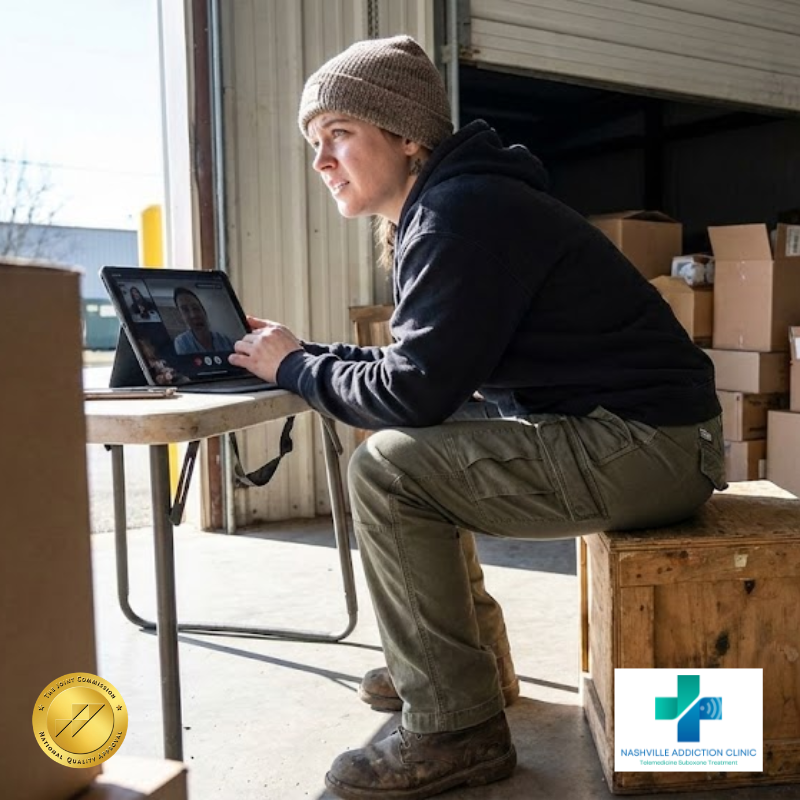
Nashville Addiction Clinic provides evidence-based Suboxone treatment through secure telemedicine, staffed by licensed Tennessee clinicians. No clinic visits required, ever.
- Statewide access across Tennessee
- Accredited by The Joint Commission
- Owned and managed by people in long-term recovery
Register for treatment online using your TennCare Medicaid, commercial insurance, or choose a payment plan. (A sliding-scale program is also available) Click here if you’re a returning patient.
How Long Do Opioids Stay in Your System?
The answer depends on:
- The specific opioid used
- How often you used it
- Your metabolism and overall health
- Liver function
- Body fat percentage
- Whether you used other substances
Different opioids stay in your system for different lengths of time.
Detection Windows for Common Opioids
Below are general detection estimates (these can vary):
- Hydrocodone: 1–2 days (urine)
- Oxycodone (Percocet, OxyContin): 1–3 days
- Morphine or Codeine: 1–3 days
- Heroin: 1–3 days
- Fentanyl: 2–4 days (sometimes longer with heavy use)
- Methadone: 3–7+ days
Blood tests usually detect opioids for shorter periods. Urine tests are the most common. Hair tests can detect opioids for up to 90 days.
For more scientific guidance on drug safety and medication metabolism, visit the FDA at https://fda.gov.
Tired of Visiting Clinics and Pharmacies? You Don’t Have to Anymore
We know the frustrations and stigmas often associated with addiction treatment, as well as the time it takes to visit a clinic, sit in a waiting room with people you don’t know, wondering if you’re being judged, watching the clock in hopes of leaving within a few hours. Sadly, your day doesn’t end there. You then have to drive to a pharmacy to pick up your Suboxone medications, which can sometimes be met with judgement, stigma, embarrassment, and even rejection.
By utilizing our Suboxone telemedicine program and overnight medication delivery pharmacy partner, you’ll never have to visit a clinic or pharmacy again.
Why “How Long Do Opioids Stay in Your System” Matters for Withdrawal
Many people aren’t just worried about drug testing. They’re afraid of withdrawal.
Opioid withdrawal can begin:
- 6–12 hours after short-acting opioids (like hydrocodone or heroin)
- 24–48 hours after long-acting opioids (like methadone)
Symptoms may include:
- Muscle aches
- Anxiety
- Sweating
- Nausea
- Restlessness
- Cravings
The fear of withdrawal keeps many people stuck. Some buy pills on the street or continue using fentanyl just to avoid getting sick.
This is where Suboxone treatment changes everything.
How Long Do Opioids Stay in Your System Before Starting Suboxone?
When transitioning into treatment, timing matters.
Starting Suboxone too early—before mild to moderate withdrawal begins—can cause precipitated withdrawal, which feels intense and uncomfortable. That’s why medical supervision is important.
At Nashville Addiction Clinic, we guide patients through:
- Safe timing
- Virtual evaluation
- Withdrawal assessment
- Same-day Suboxone prescriptions
You do not have to figure this out alone.
Suboxone works by:
- Reducing cravings
- Blocking other opioids
- Stabilizing brain chemistry
According to SAMHSA (https://samhsa.gov), medication-assisted treatment significantly improves recovery outcomes and reduces overdose risk.
Factors That Affect How Long Opioids Stay in Your System
1. Short-Acting vs. Long-Acting Opioids
Short-acting drugs (like oxycodone or heroin) leave faster. Long-acting drugs (like methadone) stay longer.
2. Frequency of Use
Someone using occasionally may clear opioids faster than someone using daily for months.
3. Fentanyl Complications
Fentanyl is different. Because it’s highly potent and fat-soluble, it may stay in the body longer than expected—especially in chronic use. This makes medical supervision even more important.
The DEA (https://dea.gov) has issued warnings about fentanyl contamination in street drugs across Tennessee.
Telemedicine Suboxone Treatment in Tennessee
If you live in Chattanooga, Jackson, Franklin, or anywhere in Tennessee, you can start treatment 100% online.
Nashville Addiction Clinic offers:
- Accredited by The Joint Commission
- Our clinic owners are in long-term recovery
- Over 260 Google Reviews (from real patients)
- Recipient of Tennessee’s first Virtual OBOT medical license
- Same-day Suboxone prescriptions
- Statewide award winner of the 2025 Best of Tennessee award for substance abuse treatment
- Over 1000 patients served since 2019
- Accepts most commercial/employee health plans, such as Blue Cross Blue Shield (all U.S. states), Cigna, Ambetter, and United Healthcare, as well as all TennCare Medicaid plans: Amerigroup Community Care, BlueCare, United Healthcare Community Plan, and Wellpoint Community Care.
- Overnight Suboxone delivery is available in most areas (a delivery fee applies)
- A compassionate team of caring doctors, nurse practitioners, counselors, and administrators who provide judgement-free care, some who are in recovery.
- Same-day appointments available every Monday through Friday from 8:00 AM to 5:00 PM (based on availability)
- Evening appointments every Monday and Wednesday until 9:00 PM
Our helpful staff is happy to answer any questions you may have. Call us or send us a text at (615) 927-7802, or message us securely using the Spruce Health mobile app.
Feeling nervous about starting telemedicine addiction treatment? Learn what to expect during your first Suboxone telemedicine appointment.
You never have to visit a clinic in person.
What to Expect When You Start Treatment
Step 1: Register Online
Choose the option that fits your situation:
- Register for Suboxone Telehealth using your TennCare Medicaid
- Register for virtual Suboxone addiction treatment with your commercial insurance
- No Insurance? Register for Suboxone Telemedicine therapy and make payments
- Register as a returning patient
- Apply for our Sliding-Scale Program
- View all Medicaid and commercial insurance plans we accept and self-pay pricing
- We accept most private/employee health insurance, such as BCBS, Cigna, Ambetter, and United Healthcare, as well as all TennCare Medicaid insurance: Amerigroup Community Care, BlueCare, United Healthcare Community Plan, and Wellpoint Community Care.
- Same-day appointments and Suboxone prescriptions are often available when fully-registered before 10:00 am Central Time. (based on availability)
Not sure if your insurance is accepted? Click here to verify your coverage.
Experience a safe transition from hydrocodone, oxycodone, OxyContin, heroin, fentanyl, methadone, morphine, Kratom, 7-OH (7-Hydroxy-opioids), Norcos, Percocet, Roxicodone, Vicodin, Tramadol, Opana, codeine, oxymorphone, and other opioids.
If you would like to speak to someone about our telemedicine Suboxone program, please call or text us at (615) 927-7802. You can also message us securely on the Spruce Health mobile app.
Step 2: Attend a Private Video Appointment
Appointments are:
- Secure
- Judgment-free
- Compassionate
- Fast
You can even meet our supportive staff here:
https://nashvilleaddictionclinic.com/meet-our-team/
Step 3: Receive Same-Day Suboxone
We help patients transition safely from:
- Hydrocodone
- Oxycodone
- Morphine
- Codeine
- Percocet
- OxyContin
- Oxymorphone
- Heroin
- Fentanyl
- Methadone
- Kratom
- 7-OH
Medication is sent to your pharmacy the same day in most cases.
Addicted to Kratom or 7-Hydroxy in Tennessee? Safe Suboxone Treatment Is Available
If you’re struggling with Kratom addiction or products containing 7-hydroxy (7-OH), you are not alone. Many people across Tennessee have experienced severe withdrawal symptoms, cravings, and loss of control after using these highly potent substances.
Recovery Care of Columbia has extensive experience helping patients safely transition from Kratom and 7-hydroxy products to buprenorphine/naloxone (Suboxone) through secure telemedicine appointments. Since 2024, we have treated hundreds of Tennesseans seeking relief from Kratom dependence—including individuals using daily amounts in excess of 800 mg.
Our providers understand the unique withdrawal patterns associated with 7-hydroxy and Kratom extracts. We develop personalized induction plans designed to reduce discomfort and stabilize you safely, without ever stepping into our clinic.
If you’re ready to stop Kratom, 7-OH, 7-Hydroxy, confidential online treatment is available now—no matter where you live in Tennessee.
FAQ: How Long Do Opioids Stay in Your System?
How long do opioids stay in your system for a urine test?
Most short-acting opioids are detectable for 1–3 days. Long-acting opioids may last up to a week.
Does fentanyl stay longer than other opioids?
Yes. Fentanyl can accumulate in fat tissue and may stay longer in chronic users.
Can I start Suboxone immediately after using opioids?
You must wait until mild to moderate withdrawal begins. Our medical team guides this process safely.
Will my employer know I’m in treatment?
Telemedicine appointments are private. Your health information is confidential.
Is opioid withdrawal dangerous?
While typically not life-threatening, withdrawal can be extremely uncomfortable. Medication-assisted treatment makes it safer and more manageable.
Fast-Online Registration for Same-Day Suboxone Prescriptions Delivered to Your Door
- TennCare Medicaid virtual addiction treatment coverage
- Commercial insurance Suboxone telemedicine program
- Self-pay telemedicine Suboxone program (make payments)
- Sliding-scale virtual Suboxone program application
You can review insurance and pricing details before scheduling, so there are no surprises.
If you have TennCare Medicaid insurance, your treatment and medication costs are typically $0. If you have commercial health insurance, we will provide you with a treatment cost estimate before scheduling your first telemedicine appointment. If you don’t have health insurance, we offer biweekly and monthly payment plans.
Related Articles
- Will Suboxone Show Up on a Drug Test?
- Same-Day Online Suboxone Treatment in Tennessee: Fast, Private Help When You Need It Most
- How Long Does Gabapentin Stay in Your System?
Addiction Resources
- Kratom/7-OH/7-hydroxymitragynine addiction is another opioid addiction-related issue facing Tennessean’s, thanks to it being readily available and unregulated. Learn more about Kratom addiction and virtual treatment options in Tennessee.
- DEA.gov – Opioid Addiction Resources
- Substance Abuse and Mental Health Services Administration (SAMHSA)
- Centers for Disease Control and Prevention | CDC.gov
- National Institute on Drug Abuse
- National Center on Substance Abuse and Child Welfare