

Kratom Dependence: Understanding the Risks and Finding Treatment in Tennessee


Kratom dependence is becoming a serious problem across Tennessee, especially among adults seeking relief from pain or trying to avoid opioid withdrawals. While many believe kratom is a “natural” or “safe” alternative, research shows that dependence on kratom can lead to the same cycle of withdrawal, cravings, and risky behaviors seen with opioids. At Nashville Addiction Clinic, we’ve seen firsthand how kratom use can spiral into addiction—and we’re here to offer a safer, proven path to recovery.
Accredited Kratom/7-OH Addiction Treatment—Anywhere in Tennessee
Nashville Addiction Clinic provides evidence-based Suboxone treatment through secure telemedicine, staffed by licensed Tennessee clinicians. No clinic visits required, ever.
- Statewide access across Tennessee
- Accredited by The Joint Commission
- Owned and operated by people in long-term recovery who live in Tennessee
Register for online treatment using your TennCare Medicaid, commercial insurance, or choose a payment plan. (A sliding-scale program is also available) Click here if you’re a returning patient.
Start Recovery for Kratom/7-OH-7-Hydroxy Addiction Today—No Clinic Visits
- Start Kratom Addiction Treatment using TennCare Medicaid
- Start Kratom Addiction Treatment using insurance
- Start Kratom Addiction Treatment and make payments (Self-Pay)
- Returning patient? Restart your Kratom addiction treatment today
- Apply for Low-Cost Kratom Addiction Treatment
- View all Medicaid and commercial insurance plans we accept
- Suboxone medications shipped to your door (a delivery fee applies)
- We accept all major health insurance, such as BCBS, Cigna, Ambetter, and United Healthcare, as well as all TennCare Medicaid insurance: Amerigroup Community Care, BlueCare, United Healthcare Community Plan, and Wellpoint Community Care.
- Same-day appointments and Suboxone prescriptions are often available when fully-registered before 10:00 am Central Time. (based on availability)
Not sure if your insurance is accepted? Click here to verify your insurance.
Experience a safe transition from hydrocodone, oxycodone, OxyContin, heroin, fentanyl, methadone, morphine, Kratom, 7-OH (7-Hydroxy-opioids), Norcos, Percocet, Roxicodone, Vicodin, Tianeptine, Tramadol, Opana, codeine, oxymorphone, and other opioids.
If you would like to speak to someone about our telemedicine Suboxone program, please call or text us at (615) 927-7802. You can also message us securely on the Spruce Health mobile app.
What Is Kratom Dependence?
Kratom (Mitragyna speciosa) is a plant native to Southeast Asia that is often marketed as a supplement. People use it for pain, anxiety, or as an alternative to opioids. However, the U.S. Food and Drug Administration (FDA) has issued multiple warnings that kratom is not approved for medical use and can lead to dependence and even death (FDA source).
Kratom dependence develops when regular use changes the brain’s reward pathways, causing tolerance, cravings, and withdrawal symptoms. Many people in Nashville, Clarksville, Murfreesboro, Chattanooga, and Knoxville report experiencing:
- Severe anxiety and irritability
- Muscle aches and restless legs
- Depression and insomnia
- Nausea, vomiting, or sweating
- Intense cravings similar to opioid withdrawal
The Link Between Kratom and Opioid Addiction
Although kratom is not classified as an opioid, it binds to the same brain receptors as drugs like heroin, fentanyl, oxycodone, and hydrocodone. The Drug Enforcement Administration (DEA) has listed kratom as a “Drug of Concern” due to its addictive potential (DEA source).
Many Tennesseans turn to kratom after experiencing opioid addiction or as a way to avoid withdrawal. Unfortunately, kratom dependence can quickly lead to relapse or the return to dangerous opioids. Overdose and death remain a real risk when kratom is combined with other substances.
Why Nashville Addiction Clinic Is Different
At Nashville Addiction Clinic, we’ve helped over 1,000 patients across Tennessee overcome opioid and kratom dependence using TeleMAT—our telemedicine medication-assisted treatment program. We were the first clinic in Tennessee to receive a virtual medical license for addiction treatment, and our patients never need to visit a physical clinic.
Here’s why patients trust us:
Nashville Addiction Clinic and Recovery Care of Columbia were awarded Tennessee’s first virtual OBOT licenses in 2024. But that’s not all:
- ✅ Accredited by The Joint Commission
- ✅ Our clinic owners are in long-term recovery
- ✅ Over 280 Google Reviews (from real patients)
- ✅ We’re proudly the first telemedicine addiction clinic in Tennessee, with a virtual medical license for treating opioid & Kratom 7-Hydroxy dependence
- ✅ Same-day Suboxone prescriptions
- ✅ Best of Tennessee’s 2025 statewide award winner for Best Substance Abuse facility
- ✅ Over 1000 patients served in 2025 between clinics
- ✅ We accept all major insurance: Blue Cross Blue Shield (all U.S. states), Cigna, Ambetter, and United Healthcare, as well as all TennCare Medicaid Amerigroup Community Care, BlueCare, United Healthcare Community Plan, and Wellpoint Community Care.
- ✅ Overnight Suboxone delivery is available in most areas (a delivery fee applies)
- ✅ A compassionate team of doctors, nurse practitioners, counselors, and administrators who provide judgement-free care, some who are in recovery.
- ✅ Same-day appointments every Monday through Friday from 8:00 AM to 5:00 PM (based on availability)
- ✅ Evening appointments every Monday and Wednesday until 9:00 PM
Call or text us at (615) 927-7802, or message us securely on the Spruce Health mobile app.
Feeling nervous about starting telemedicine addiction treatment? Learn what to expect during your first Suboxone telemedicine appointment.
👉 Call or text us at (615) 927-7802 or message us securely on the Spruce Health app to start today.
How Telemedicine Treatment Works
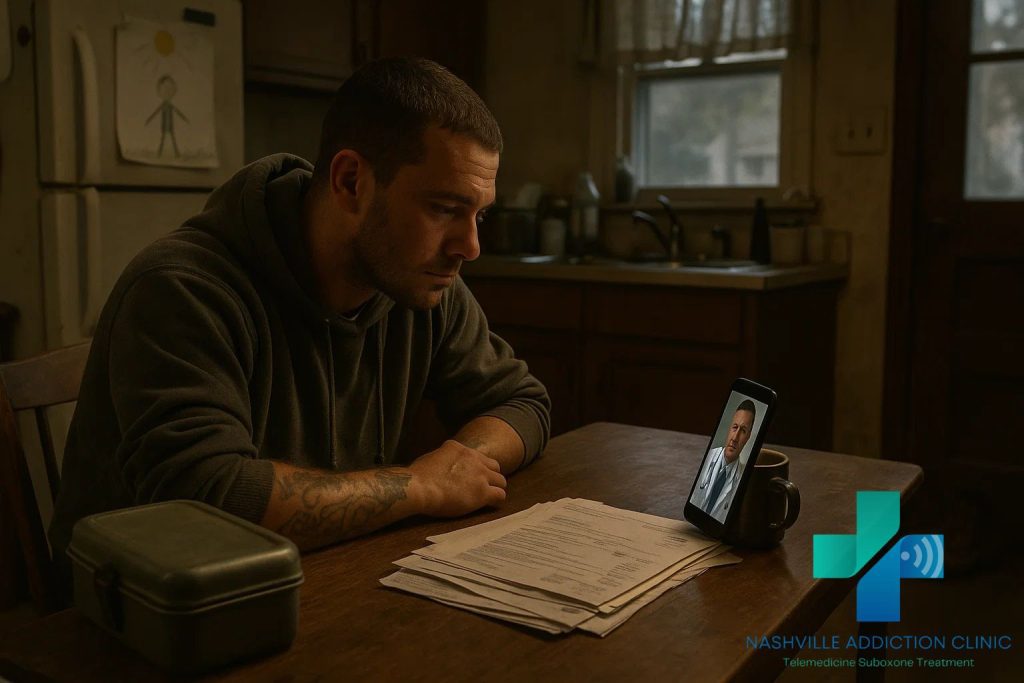
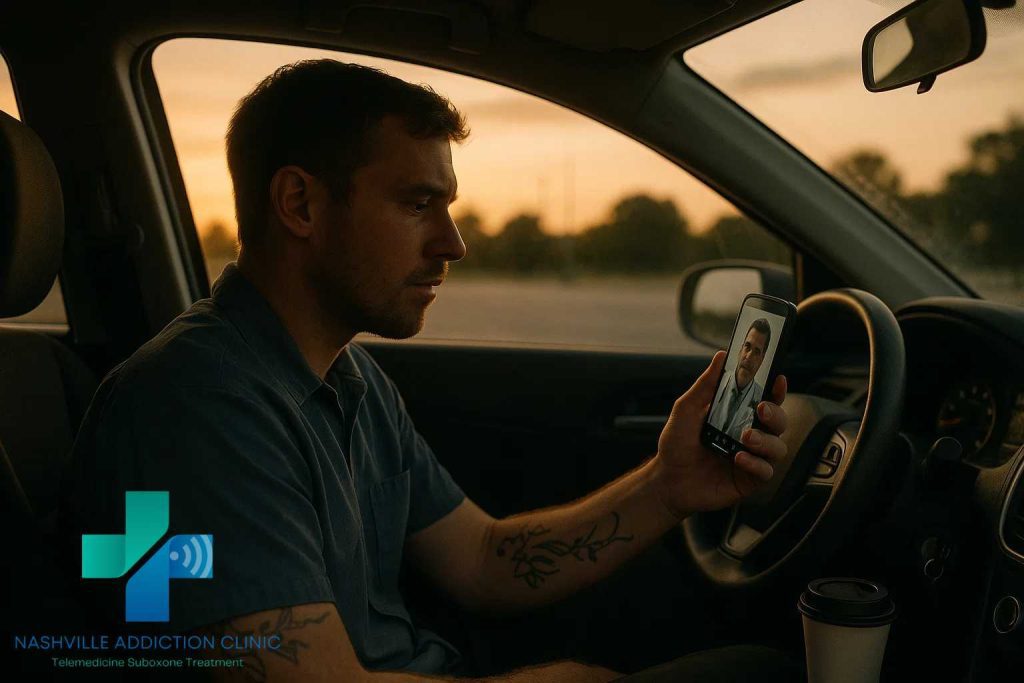
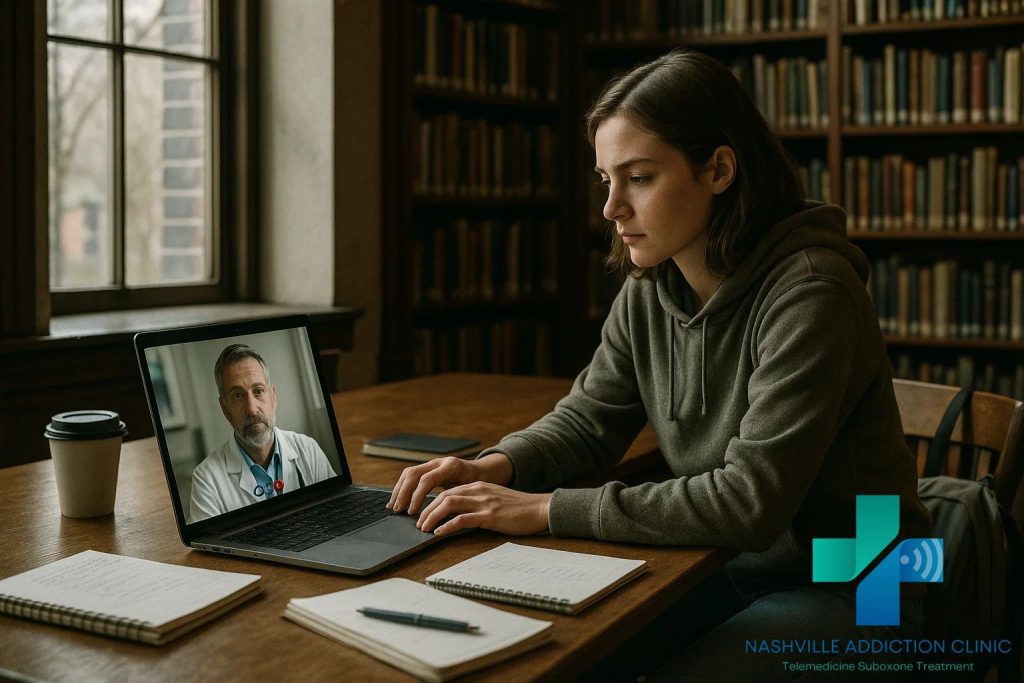
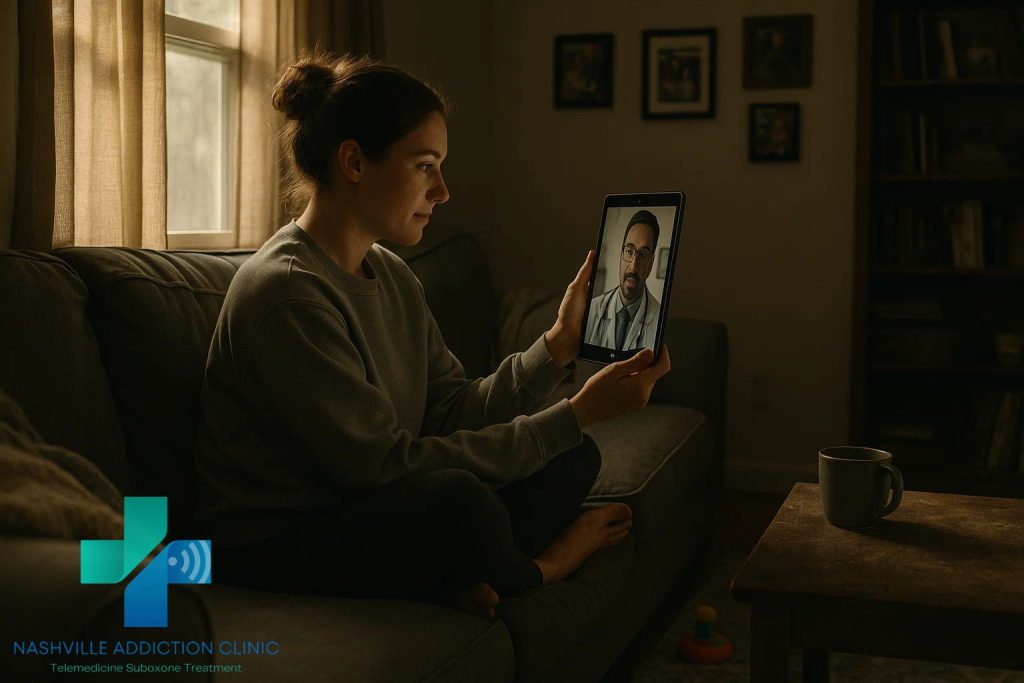
With TeleMAT, patients can receive high-quality addiction treatment from home using only a smartphone.
Steps to begin treatment:
- Register online using TennCare Medicaid, commercial insurance, or self-pay.
- Meet your doctor virtually on your first appointment.
- Receive Suboxone the same day from your local pharmacy.
- Work with counselors who understand trauma, stress, and mental health challenges.
- Stay connected with ongoing support and compassionate care.
This model has helped patients in rural areas—those without reliable transportation—access life-saving treatment without barriers.
Kratom Dependence Treatment With Suboxone
Suboxone (buprenorphine/naloxone) is FDA-approved for opioid use disorder and has been shown to reduce cravings, eliminate withdrawal, and prevent relapse. For patients transitioning from kratom, our clinicians carefully guide the process to ensure it’s safe, painless, and effective.
We’ve successfully helped people transition from:
- Hydrocodone
- Oxycodone / OxyContin / Percocet
- Heroin and fentanyl
- Methadone
- Kratom and 7-hydroxy-mitragynine
Counseling and Long-Term Recovery
Medication alone is not enough. At Nashville Addiction Clinic, recovery includes:
- Individual counseling with trauma-informed therapists
- Family support programs to rebuild relationships
- Peer recovery specialists who understand what patients are going through
- Customized relapse prevention plans for work, family, and daily life
Our team knows recovery is more than just stopping drugs—it’s about building a better future.
Kratom Dependence – FAQs
Q1: What is kratom dependence?
A: Kratom dependence occurs when your body adapts to regular use, leading to withdrawal symptoms when you stop.
Q2: How quickly can kratom dependence develop?
A: Dependence can develop within weeks of regular use, especially at higher doses.
Q3: What are the signs of kratom dependence?
A: Signs include needing more to feel the same effects, withdrawal symptoms, cravings, and difficulty stopping.
Q4: Is kratom physically addictive?
A: Yes, kratom can cause physical dependence due to its effects on opioid receptors.
Q5: Can you be dependent on kratom without realizing it?
A: Yes, many people initially believe it’s harmless until they try to stop and experience withdrawal.
Q6: Does kratom tolerance increase over time?
A: Yes, users often need higher doses over time to achieve the same effects.
Q7: What happens if you suddenly stop using kratom?
A: You may experience withdrawal symptoms such as anxiety, fatigue, and muscle aches.
Q8: Can kratom dependence turn into addiction?
A: Yes, dependence can progress into addiction, especially with continued use despite negative consequences.
Q9: How is kratom dependence treated?
A: Treatment may include medical support, medications, counseling, and structured recovery programs.
Start Recovery Today
If you or someone you love is struggling with kratom dependence or opioid addiction, don’t wait until it’s too late. The risk of overdose and death is real. But recovery is possible—without shame, without stigma, and without ever leaving home.
👉 Call or text (615) 927-7802 now, or begin your journey by choosing the right registration option below:
- Start Kratom 7-OH Addiction Treatment with TennCare Medicaid
- Start Kratom 7-hydroxy Addiction Treatment with insurance
- Start Kratom 7-hydroxymitragynine Addiction Treatment (Self-Pay)
- Returning patient? Restart your Kratom/7-OH treatment
- Apply for Low-Cost Treatment
You can check your insurance and pricing before you’re scheduled, so there are no surprises.
Related Articles
- Kratom Withdrawal: Safe, Virtual Recovery Options in Tennessee
- Kratom Use Disorder: Understanding Treatment Options in Tennessee
- Does Suboxone Help Kratom 7-OH Withdrawal?
External Resources
- Kratom & 7-Hydroxymitragynine Addiction Treatment in Tennessee
- DEA.gov – Opioid Addiction Resources
- The U.S. Food and Drug Administration (FDA)
- Substance Abuse and Mental Health Services Administration (SAMHSA)
- Centers for Disease Control and Prevention | CDC.gov
- National Institute on Drug Abuse
- Learn How to Transition from Kratom to Suboxone in Tennessee