

Symptoms of Kratom Withdrawal: Safe, Virtual Recovery in Tennessee


The symptoms of kratom withdrawal can feel overwhelming—anxiety, nausea, body aches, and cravings that make quitting nearly impossible. At Nashville Addiction Clinic, we help Tennesseans from Nashville, Knoxville, Memphis, Chattanooga, and Murfreesboro find safe, virtual recovery through Suboxone treatment.
If you or a loved one is struggling, you’re not alone. Kratom dependence and opioid addiction are serious, and left untreated, can lead to life-threatening consequences, including overdose or death.
Accredited Kratom/7-OH Addiction Treatment—Anywhere in Tennessee
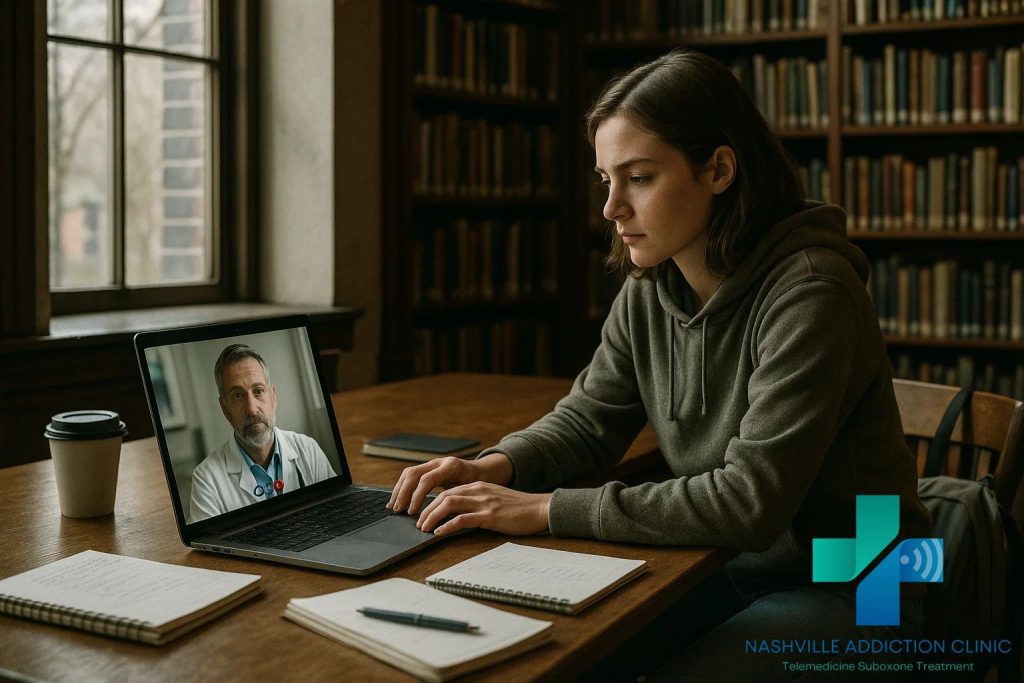
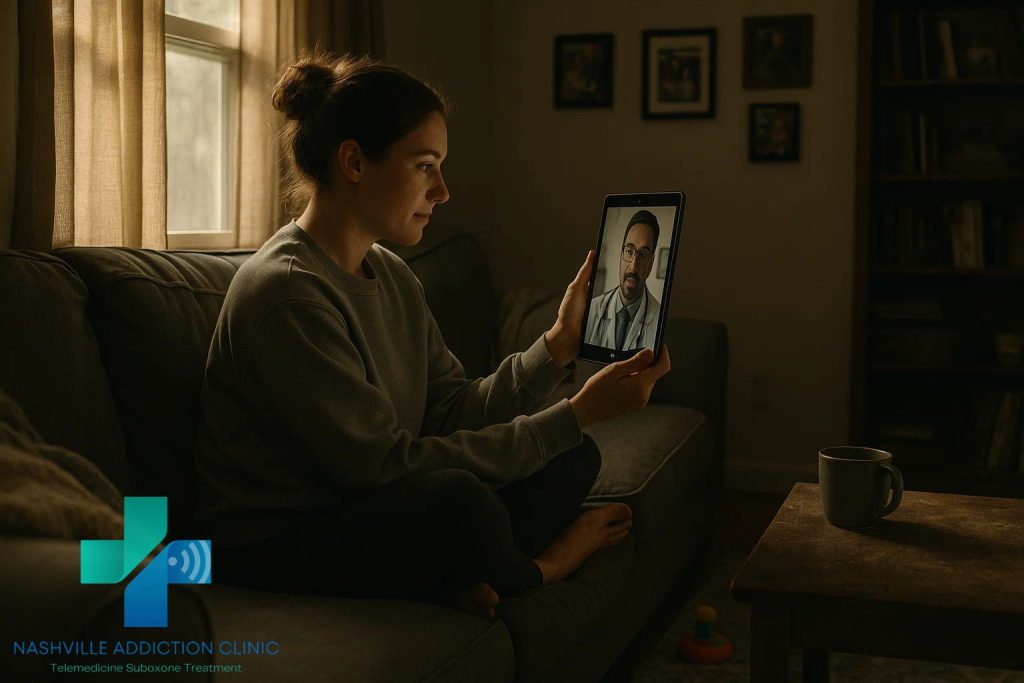
Nashville Addiction Clinic provides evidence-based Suboxone treatment through secure telemedicine, staffed by licensed Tennessee clinicians. No clinic visits required, ever.
- Statewide access across Tennessee
- Accredited by The Joint Commission
- Owned and operated by people in long-term recovery who live in Tennessee
Register for online treatment using your TennCare Medicaid, commercial insurance, or choose a payment plan. (A sliding-scale program is also available) Click here if you’re a returning patient.
Start Recovery for Kratom/7-OH-7-Hydroxy Addiction Today—No Clinic Visits
- Start Kratom Addiction Treatment using TennCare Medicaid
- Start Kratom Addiction Treatment using insurance
- Start Kratom Addiction Treatment and make payments (Self-Pay)
- Returning patient? Restart your Kratom addiction treatment today
- Apply for Low-Cost Kratom Addiction Treatment
- View all Medicaid and commercial insurance plans we accept
- Suboxone medications shipped to your door (a delivery fee applies)
- We accept all major health insurance, such as BCBS, Cigna, Ambetter, and United Healthcare, as well as all TennCare Medicaid insurance: Amerigroup Community Care, BlueCare, United Healthcare Community Plan, and Wellpoint Community Care.
- Same-day appointments and Suboxone prescriptions are often available when fully-registered before 10:00 am Central Time. (based on availability)
Not sure if your insurance is accepted? Click here to verify your insurance.
Experience a safe transition from hydrocodone, oxycodone, OxyContin, heroin, fentanyl, methadone, morphine, Kratom, 7-OH (7-Hydroxy-opioids), Norcos, Percocet, Roxicodone, Vicodin, Tianeptine, Tramadol, Opana, codeine, oxymorphone, and other opioids.
If you would like to speak to someone about our telemedicine Suboxone program, please call or text us at (615) 927-7802. You can also message us securely on the Spruce Health mobile app.
What Are the Symptoms of Kratom Withdrawal?
While some people think kratom is a “natural” alternative, the truth is that kratom acts on the same opioid receptors as heroin, oxycodone, and fentanyl. According to the FDA, kratom carries serious risks of addiction, dependence, and withdrawal.
Common symptoms of kratom withdrawal include:
- Anxiety and restlessness
- Muscle aches and joint pain
- Sweating and chills
- Insomnia and fatigue
- Irritability or mood swings
- Cravings for kratom or opioids
- Nausea, vomiting, and diarrhea
- Depression or feelings of hopelessness
These symptoms can begin within hours of the last dose and may last days or weeks without treatment.
Why Kratom Withdrawal Feels Like Opioid Withdrawal
Many patients we’ve treated across Tennessee describe kratom withdrawal as “just like heroin withdrawal.” That’s because kratom’s active alkaloids—mitragynine and 7-hydroxymitragynine—bind to the brain’s opioid receptors. The DEA has warned about kratom’s addictive properties, and the SAMHSA helpline receives thousands of calls annually for kratom-related dependence.
Without treatment, withdrawal often leads people right back to kratom, pills, or heroin—trapping them in the same painful cycle.
How Suboxone Helps With Kratom Withdrawal
At Nashville Addiction Clinic, we use Suboxone (buprenorphine/naloxone) to stabilize patients and relieve withdrawal symptoms. Suboxone virtually eliminates cravings and withdrawal, making recovery possible without suffering.
Benefits of Suboxone treatment for kratom withdrawal include:
- Immediate relief – Same-day prescriptions sent to your pharmacy.
- No in-person visits – 100% online through our secure app.
- Safe and proven – FDA-approved for opioid use disorder.
- Personalized care – Ongoing counseling with master’s-level therapists.
- Supportive staff – Our team understands addiction because many of us have lived it.
About Nashville Addiction Clinic
For more than six years, Nashville Addiction Clinic has been Tennessee’s trusted leader in TeleMAT® (telemedicine medication-assisted treatment).
Nashville Addiction Clinic and Recovery Care of Columbia were awarded Tennessee’s first virtual OBOT licenses in 2024. But that’s not all:
- ✅ Accredited by The Joint Commission
- ✅ Our clinic owners are in long-term recovery
- ✅ Over 280 Google Reviews (from real patients)
- ✅ We’re proudly the first telemedicine addiction clinic in Tennessee, with a virtual medical license for treating opioid & Kratom 7-Hydroxy dependence
- ✅ Same-day Suboxone prescriptions
- ✅ Best of Tennessee’s 2025 statewide award winner for Best Substance Abuse facility
- ✅ Over 1000 patients served in 2025 between clinics
- ✅ We accept all major insurance: Blue Cross Blue Shield (all U.S. states), Cigna, Ambetter, and United Healthcare, as well as all TennCare Medicaid Amerigroup Community Care, BlueCare, United Healthcare Community Plan, and Wellpoint Community Care.
- ✅ Overnight Suboxone delivery is available in most areas (a delivery fee applies)
- ✅ A compassionate team of doctors, nurse practitioners, counselors, and administrators who provide judgement-free care, some who are in recovery.
- ✅ Same-day appointments every Monday through Friday from 8:00 AM to 5:00 PM (based on availability)
- ✅ Evening appointments every Monday and Wednesday until 9:00 PM
Call or text us at (615) 927-7802, or message us securely on the Spruce Health mobile app.
Feeling nervous about starting telemedicine addiction treatment? Learn what to expect during your first Suboxone telemedicine appointment.
Who We Help
Our program is designed for adults ages 18 to 65 who are struggling with kratom, opioids, or both. Many of our patients are:
- Parents who want to be there for their children
- Workers who need to keep their job or CDL license
- People with TennCare Medicaid or commercial insurance
- Tennesseans in rural areas who can’t travel to a clinic
- Those who are tired of chasing pills or kratom just to feel “normal”
Whether you’re in Nashville, Knoxville, Jackson, Clarksville, or Kingsport, help is available today—without stepping foot in a clinic.
How to Get Started
We make treatment simple and accessible.
- Choose your payment option:
- Meet our kind, supportive staff: Meet our team
- Receive Suboxone the same day: Prescriptions can be picked up locally or delivered overnight.
- Access counseling and long-term support: Apply for our sliding-scale program
Have questions? Call or text us at (615) 927-7802 or send a secure message on the Spruce Health app.
Symptoms of Kratom Withdrawal – FAQs
Q1: What are the most common symptoms of kratom withdrawal?
A: Common symptoms include anxiety, insomnia, muscle aches, sweating, nausea, irritability, and strong cravings.
Q2: When do kratom withdrawal symptoms begin?
A: Symptoms typically begin within 12–24 hours after the last dose, depending on usage patterns.
Q3: How long do kratom withdrawal symptoms last?
A: Acute symptoms usually last 4–7 days, but some psychological symptoms can persist longer.
Q4: Is kratom withdrawal dangerous?
A: While usually not life-threatening, it can be extremely uncomfortable and difficult to manage without support.
Q5: Why does kratom withdrawal feel similar to opioid withdrawal?
A: Kratom interacts with opioid receptors in the brain, which is why withdrawal symptoms can resemble those of opioids.
Q6: Can kratom withdrawal cause depression or anxiety?
A: Yes, mood changes, including depression and anxiety, are common during withdrawal.
Q7: What helps relieve kratom withdrawal symptoms?
A: Medical treatment, hydration, rest, and medications like buprenorphine may help reduce symptoms.
Q8: Can I manage withdrawal at home?
A: Some people can, but moderate to severe cases often benefit from medical supervision.
Q9: What is the hardest part of kratom withdrawal?
A: Many people report that cravings and insomnia are the most difficult symptoms to manage.
Why Choose Nashville Addiction Clinic
Unlike other programs, we were founded by people in active recovery who wanted a clinic where patients are treated with respect, not judgment. We know recovery is about more than medication—it’s about counseling, community, and support.
At Nashville Addiction Clinic, you’ll find:
- Experienced clinicians with a passion for helping
- Confidential telehealth appointments on your phone
- A proven program of Suboxone, counseling, and care
- A team that will support you every step of the way
We Bring Recovery to You—Start 7-OH/Kratom Addiction Treatment Today from Home
- Start Kratom 7-OH Addiction Treatment with TennCare Medicaid
- Start Kratom 7-hydroxy Addiction Treatment with insurance
- Start Kratom 7-hydroxymitragynine Addiction Treatment (Self-Pay)
- Returning patient? Restart your Kratom/7-OH treatment
- Apply for Low-Cost Treatment
You can check your insurance and pricing before you’re scheduled, so there are no surprises.
Related Articles
- Kratom Withdrawal: Safe, Virtual Recovery Options in Tennessee
- Suboxone Treatment From Home: Steps to Get Started
- Kratom Use Disorder: Understanding Treatment Options in Tennessee
More Resources About Kratom Addiction
- Kratom & 7-Hydroxymitragynine Addiction Treatment in Tennessee—From Home
- DEA.gov – Opioid Addiction Resources
- The U.S. Food and Drug Administration (FDA)
- Substance Abuse and Mental Health Services Administration (SAMHSA)
- Centers for Disease Control and Prevention | CDC.gov
- National Institute on Drug Abuse
- Learn How to Transition from Kratom to Suboxone in Tennessee