

Blog
Cat’s Claw Tablets: Ingredients, Side Effects, Safety Risks, and What You Should Know
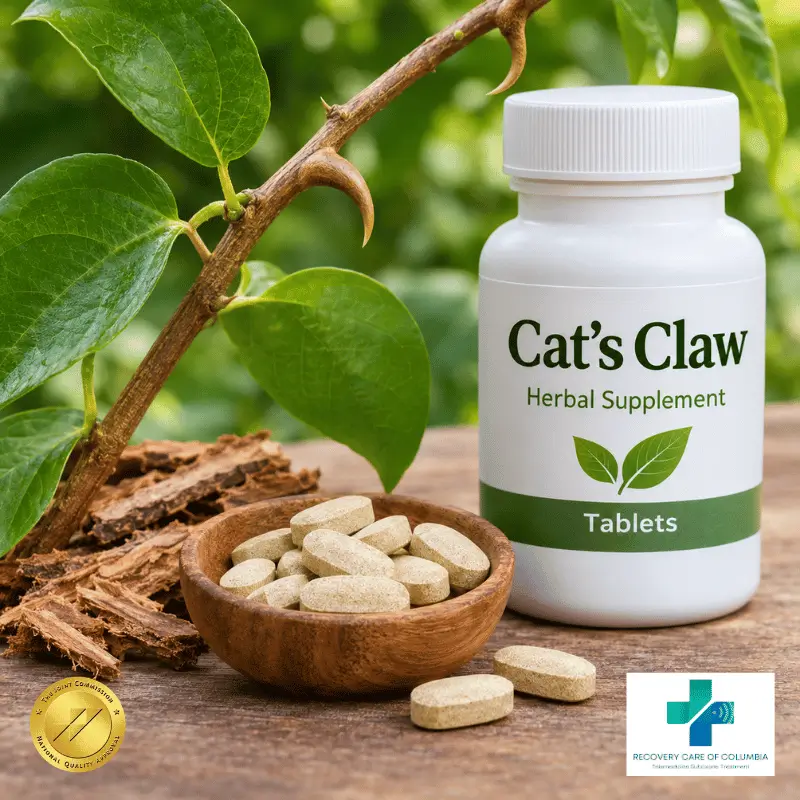
Cat’s Claw tablets commonly appear on store shelves as herbal supplements. However, consumers often have questions about their ingredients, effects, and safety. Traditional Cat’s Claw comes from a tropical plant, but a product’s name alone cannot confirm its ingredients.
This distinction matters because concentrated kratom-derived products containing 7-hydroxymitragynine (7-OH) have raised serious public health concerns.
Tennessee residents can make more informed decisions by understanding the differences between botanical Cat’s Claw, kratom, and other commercial tablets.
This guide explains what Cat’s Claw tablets contain, their potential side effects, how they differ from 7-OH products, and when to seek medical assistance.
What Are Cat’s Claw Tablets?
Cat’s Claw is a botanical supplement that comes from climbing vines in tropical regions of Central and South America.
Two plant species commonly provide Cat’s Claw extracts: Uncaria tomentosa and Uncaria guianensis.
Traditional herbal practitioners have used these plants for various wellness purposes. Today, manufacturers offer Cat’s Claw in tablets, capsules, powders, and liquid extracts.
According to the National Center for Complementary and Integrative Health (NCCIH), manufacturers promote Cat’s Claw for arthritis, immune support, and other health concerns. However, researchers have not found conclusive scientific evidence that Cat’s Claw effectively treats any medical condition.
Importantly, the term “Cat’s Claw tablets” does not confirm the ingredients of a specific commercial product.
Start Your Recovery Today—Discrete, Private, No Clinic Visits, Ever
- Start Treatment with TennCare Medicaid
- Start Treatment with UHC Medicare Advantage
- Start Treatment with commercial insurance
- Start Treatment and pay out-of-pocket (Self-Pay)
- Quit Kratom, Cat’s Claw, and MGM-16 Safely
- Returning patient? Restart your treatment
- Apply for Low-Cost Treatment
- View all Medicaid and commercial insurance plans we accept
- Suboxone medications shipped to your door (a delivery fee applies)
- We accept all major health insurance, such as BCBS, Cigna, Ambetter, and United Healthcare, all TennCare Medicaid insurance: Amerigroup Community Care, BlueCare, United Healthcare Community Plan, Wellpoint Community Care, and UHC Medicare Advantage.
- We atrive for same-day appointments and Suboxone prescriptions – We’ll do everything possible to ensure you are seen as quickly as possible. We know how important it is to start treatment quickly when you’re ready for help.
What Ingredients Are in Cat’s Claw Tablets?
Traditional Cat’s Claw supplements generally contain plant material or extracts from Uncaria species.
Depending on the formulation, manufacturers may include:
- Powdered Cat’s Claw bark or root.
- Concentrated botanical extracts.
- Tablet-binding ingredients.
- Additional herbs or inactive substances.
The exact ingredients vary between manufacturers.
Consumers should review the Supplement Facts panel, ingredient list, and manufacturer information before using an unfamiliar product.
A label shows the ingredients that the manufacturer declares, but it cannot independently guarantee the product’s chemical composition.
Is Cat’s Claw the Same as Kratom?
No. Cat’s Claw and kratom come from different plants.
Cat’s Claw comes from the Uncaria genus, while kratom comes from Mitragyna speciosa, a tropical tree native to Southeast Asia.
Kratom contains naturally occurring compounds, including mitragynine and small amounts of 7-hydroxymitragynine.
These compounds differ from those that researchers commonly associate with traditional Cat’s Claw extracts.
Although both plants appear in discussions about herbal wellness, they do not necessarily produce the same effects or carry the same risks.
Are Cat’s Claw Tablets Safe?
Several factors influence the safety of Cat’s Claw tablets, including their ingredients, the amount someone consumes, medical history, and potential medication interactions.
According to NCCIH, limited research suggests that traditional Cat’s Claw has a reasonable short-term safety profile when people take it orally.
However, researchers still lack sufficient evidence about its long-term safety.
People who take prescription medications or manage chronic health conditions should consult a healthcare professional before using Cat’s Claw.
Potential Side Effects of Cat’s Claw Tablets
Traditional Cat’s Claw may cause side effects or create additional risks for certain individuals.
Important safety concerns include:
- Blood clotting: Cat’s Claw may slow blood clotting and increase concerns about bleeding.
- Medication interactions: Cat’s Claw may interact with medications that affect blood pressure or blood clotting.
- Immune system effects: Cat’s Claw may stimulate immune activity, which could create problems for people with autoimmune diseases.
- Pregnancy: Research suggests potential risks during pregnancy, while reliable information about breastfeeding remains limited.
Researchers have not confirmed every possible interaction through rigorous clinical trials.
A qualified healthcare professional can help patients understand their individual risks and possible medication interactions.
Does Natural Mean Safe?
Not necessarily.
Natural substances can cause side effects, interact with prescription medications, and create complications for people with certain medical conditions.
The FDA also regulates dietary supplements differently from prescription medications.
Unlike prescription drugs, dietary supplements generally do not require FDA approval before manufacturers sell them.
Manufacturers must still follow applicable safety and labeling requirements.
Consumers should avoid assuming that independent laboratories have tested every product simply because a retailer offers it for sale.
Do Cat’s Claw Tablets Contain 7-OH or Opioids?
Traditional botanical Cat’s Claw differs from kratom and concentrated 7-OH products.
Current evidence does not support the claim that every product marketed as Cat’s Claw tablets contains opioids, kratom, or 7-OH.
To determine the ingredients of a specific commercial tablet, researchers or regulatory authorities would need reliable product-specific evidence. Such evidence might include manufacturer records, appropriate laboratory testing, or official regulatory findings.
Consumers should not identify a product’s ingredients based on its name alone.
What Is 7-Hydroxymitragynine?
7-Hydroxymitragynine, commonly known as 7-OH, is an opioid-active substance associated with kratom.
The kratom plant naturally contains small amounts of 7-OH. However, some manufacturers produce products with enhanced or concentrated quantities of this compound.
These products may appear as tablets, gummies, or liquid preparations.
The FDA has warned that concentrated 7-OH products may cause serious harm, including misuse, dependence, addiction, and dangerous opioid-related effects.
Consumers should not assume that traditional Cat’s Claw supplements contain 7-OH simply because both products appear in discussions about herbal substances.
For more information, read Nashville Addiction Clinic’s kratom and 7-OH addiction treatment guide.
Why Accurate Product Identification Matters
Different products may share similar names or packaging while containing entirely different ingredients.
Before using an unfamiliar tablet, consumers should check:
- The complete product name.
- The manufacturer’s name and contact information.
- The ingredient list and declared amounts.
- Any credible independent laboratory testing information.
Consumers should exercise caution when products lack clear ingredient information or make extraordinary claims about their effects.
If you cannot verify a tablet’s contents, avoid using it until you obtain reliable information.
Cat’s Claw Tablets vs. Concentrated 7-OH Products
Botanical Cat’s Claw supplements and concentrated 7-OH products are not interchangeable.
Traditional Botanical Cat’s Claw
Traditional Cat’s Claw supplements come from Uncaria plants.
Manufacturers commonly promote these supplements for general wellness, although scientific evidence does not conclusively support their effectiveness for treating specific medical conditions.
Potential concerns include medication interactions, effects on certain medical conditions, and limited long-term safety research.
Researchers have not established traditional Cat’s Claw as an opioid product.
Concentrated 7-OH Products
Concentrated 7-OH products contain enhanced amounts of an opioid-active compound associated with kratom.
Federal health authorities have raised concerns about misuse, dependence, addiction, and potentially dangerous opioid effects.
The FDA has not approved concentrated 7-OH for any medical use.
Why the Difference Matters
Incorrectly identifying a botanical supplement as an opioid product can mislead consumers.
Likewise, consumers may expose themselves to unnecessary risks when they assume an unfamiliar commercial tablet is harmless because its packaging uses herbal terminology.
Accurate product identification helps consumers understand potential risks and make informed decisions.
What Tennessee Consumers Should Know About Supplement Safety
Tennessee consumers may encounter herbal supplements and unfamiliar tablets through online sellers, convenience stores, or other retailers.
However, retail availability does not guarantee that a product meets safety standards or contains the ingredients listed on its packaging.
Consumers should approach products cautiously when advertisements make exaggerated claims about pain relief, relaxation, energy, or mood enhancement.
Federal Concerns About Concentrated 7-OH
The FDA has issued warnings and pursued enforcement actions involving concentrated 7-OH products.
Federal officials have also discussed regulatory recommendations concerning enhanced 7-OH and related substances.
Consumers should distinguish regulatory recommendations and proposals from finalized legal restrictions.
These federal actions do not establish that traditional Cat’s Claw supplements contain concentrated 7-OH.
The legal status of a particular commercial tablet depends on its actual ingredients and applicable federal and state laws.
How to Evaluate an Unfamiliar Tablet
Before taking an unfamiliar product, review its manufacturer information, ingredient list, and intended use.
Avoid relying solely on advertisements, testimonials, or claims that a product is harmless because it comes from a natural source.
A pharmacist or healthcare professional can help identify potential risks, especially when you take other medications.
Warning Signs of a Dangerous Reaction
Unexpected symptoms after taking an unfamiliar supplement require attention.
The ingredients, interactions with medications, or undeclared substances may cause serious reactions.
Watch for emergency warning signs such as:
- Slow, irregular, or stopped breathing.
- Severe difficulty waking up.
- Unresponsiveness or collapse.
- Blue or gray lips or skin.
- Seizures or other life-threatening symptoms.
Call 911 immediately if someone experiences signs of a suspected overdose or medical emergency.
If you suspect opioid exposure, administer naloxone if you have it and follow the product instructions. Naloxone can reverse opioid-related respiratory depression, but the person still needs emergency medical assistance.
For possible poisoning without immediately life-threatening symptoms, contact Poison Control at 1-800-222-1222 in the United States.
Do not attempt to treat severe symptoms with home remedies.
Can Cat’s Claw Tablets Cause Dependence or Withdrawal?
Researchers have not established traditional botanical Cat’s Claw as an opioid or as a substance that routinely causes opioid-type dependence.
However, products containing concentrated 7-OH or other opioid-active substances may cause physical dependence and withdrawal.
Several factors influence these risks, including the ingredients, quantity consumed, frequency of use, and individual medical circumstances.
Possible Symptoms of Opioid-Related Withdrawal
Withdrawal from opioid-active substances may cause:
- Anxiety or restlessness.
- Difficulty sleeping.
- Muscle discomfort.
- Nausea or digestive symptoms.
- Sweating or chills.
- Strong urges to continue using the substance.
These symptoms cannot reliably identify which substance a person has taken.
Anyone experiencing difficulty stopping an unfamiliar tablet or suspected opioid-active product should consult a qualified healthcare professional.
What Should You Do If You Have Taken an Unknown Tablet?
If you have taken a tablet with uncertain ingredients, watch for unexpected symptoms and avoid additional doses until you understand the potential risks.
Do not combine unfamiliar substances with alcohol, sedatives, or other drugs.
Keep the original packaging, if possible, so a healthcare professional can examine the manufacturer’s ingredient information.
Seek medical guidance if you develop symptoms, take other medications, or have concerns about repeated use.
During an evaluation, a healthcare professional may ask about the product, the amount you consumed, when you took it, your medical history, and any other substances involved.
Treatment Options for Opioid Dependence in Tennessee
Not everyone who takes an herbal supplement has a substance use disorder.
However, difficulty controlling opioid-active substance use, withdrawal symptoms, or continued use despite harmful consequences may indicate a need for professional evaluation.
Healthcare professionals can treat opioid use disorder with evidence-based approaches.
Treatment may include medications such as buprenorphine, counseling, behavioral support, and ongoing medical follow-up.
Can Buprenorphine Help With 7-OH Dependence?
Buprenorphine is an established medication for opioid use disorder.
People experiencing dependence on concentrated 7-OH or other opioid-active substances may benefit from a clinical evaluation to determine whether medication treatment is appropriate.
Licensed clinicians consider the person’s symptoms, medical history, substance use, and treatment needs before recommending medication.
Virtual Addiction Treatment in Tennessee
Nashville Addiction Clinic provides telemedicine treatment for opioid addiction throughout Tennessee.
The clinic also evaluates patients who experience problems related to kratom and concentrated 7-OH use.
Eligible patients can meet with licensed healthcare professionals for virtual assessments, medication treatment when clinically appropriate, and ongoing recovery support.
To learn about the registration process, visit NAC’s online Suboxone treatment registration page.
A licensed clinician will assess each patient’s needs and determine appropriate treatment options.
Frequently Asked Questions About Cat’s Claw Tablets
What are Cat’s Claw tablets used for?
Manufacturers commonly market traditional Cat’s Claw tablets for herbal wellness, immune support, and joint health. However, researchers have not found conclusive evidence that Cat’s Claw effectively treats any medical condition.
Are Cat’s Claw tablets addictive?
Researchers have not established traditional botanical Cat’s Claw as an opioid or as a substance that routinely causes opioid-type addiction. However, a separately marketed tablet may carry different risks depending on its ingredients.
Is Cat’s Claw the same as kratom?
No. Cat’s Claw comes from Uncaria plants, while kratom comes from Mitragyna speciosa. These plants have different botanical identities and chemical compositions.
Do Cat’s Claw tablets contain 7-OH?
Current evidence does not establish that all products marketed as Cat’s Claw tablets contain 7-OH. Reliable product-specific evidence is necessary to identify the ingredients of an individual commercial tablet.
Can Cat’s Claw tablets cause an overdose?
Traditional Cat’s Claw and concentrated opioid-active products have different safety profiles. However, unfamiliar substances can cause serious adverse reactions. Call 911 if someone experiences symptoms of a suspected overdose.
Can you take Cat’s Claw with prescription medications?
Cat’s Claw may interact with medications that affect blood pressure, blood clotting, or immune function. Consult your healthcare professional before combining Cat’s Claw supplements with prescription medications.
Are Cat’s Claw tablets legal in Tennessee?
The legal status of an individual product depends on its ingredients and applicable laws. A product’s name alone does not establish its legal classification.
What is the difference between Cat’s Claw and 7-OH?
Traditional Cat’s Claw comes from botanical plants in the Uncaria genus. In contrast, 7-OH is an opioid-active compound associated with kratom and concentrated commercial products.
What should I do if I cannot stop taking an unfamiliar tablet?
Seek professional medical guidance. A healthcare professional can evaluate possible dependence, withdrawal symptoms, and treatment options.
Can people experiencing 7-OH dependence receive addiction treatment?
Yes. People who struggle with concentrated 7-OH use can seek a professional assessment for opioid-related dependence. Licensed clinicians can recommend appropriate treatment, including medication when clinically indicated.
Getting Help for Opioid, Kratom, or 7-OH Dependence in Tennessee
Understanding the ingredients of an unfamiliar tablet is an important step toward protecting your health.
Traditional Cat’s Claw differs from kratom and concentrated 7-OH products. Consumers should rely on credible ingredient information instead of assuming that similarly named products contain the same substances.
If you struggle to stop using an opioid-active substance, experience withdrawal symptoms, or worry about dependence, professional treatment may help.
Nashville Addiction Clinic provides virtual opioid addiction treatment services throughout Tennessee. Licensed healthcare professionals evaluate patients and recommend individualized care based on their medical needs.
Ready to explore your treatment options?
Start Your Treatment Registration
Explore the registration option that matches your circumstances:
- Register with TennCare Medicaid
- Register with Commercial Insurance
- Explore the Sliding-Scale Program
- Review Insurance and Pricing
- Register as a Returning Patient
Questions about getting started? Call or text Nashville Addiction Clinic at (615) 927-7802.
Appointment availability varies, insurance benefits require verification, and licensed clinicians determine treatment eligibility through individual assessments.
You can take the first step toward recovery by speaking with a qualified healthcare professional about your concerns and available treatment options.
Related Articles:
- Suboxone Dr Near Me: Your Guide to Opioid Addiction Treatment
- MGM-15 Withdrawal: Symptoms, Timeline, Risks, and Treatment
- Are Dr. Reddy’s Generic Suboxone Films Making You Sick?
- 7-OH Withdrawal: A Safer Path to Recovery in Tennessee
- 7-OH Addiction Treatment in Tennessee: Safe, Virtual Recovery with Suboxone
Recent Posts
- MGM-15 Withdrawal: Symptoms, Timeline, Risks, and Treatment
- Cat’s Claw Tablets: Ingredients, Side Effects, Safety Risks, and What You Should Know
- Nashville Addiction Clinic Wins 2026 Best of Tennessee Regional Award
- Online Fentanyl Addiction Treatment for Tennessee Residents
- UnitedHealthcare Medicare Advantage Accepted at Nashville Addiction Clinic
Recent Comments