

Blog
Online Fentanyl Addiction Treatment for Tennessee Residents
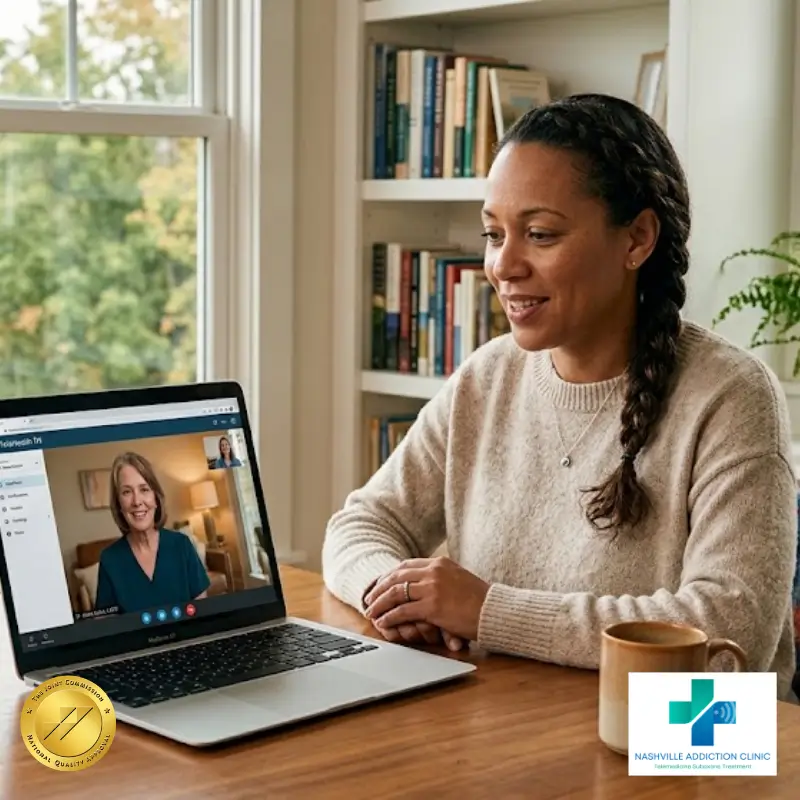
If fentanyl has become part of your life—whether you have been using it knowingly or discovered it in pills or other drugs—you can ask for help without walking into a clinic. Nashville Addiction Clinic provides private, online fentanyl addiction treatment for adults who are located in Tennessee. Care is delivered through secure telemedicine and may include Suboxone when a licensed provider determines that it is clinically appropriate.
Because fentanyl can complicate withdrawal and the process of starting buprenorphine, treatment should be planned around your individual history and symptoms. You do not need to determine the right timing or medication approach on your own.
Getting Help for Fentanyl Addiction
Fentanyl is an opioid. When repeated use causes cravings, withdrawal, loss of control, or continued use despite harmful consequences, a person may have opioid use disorder. This is a treatable medical condition—not a moral failure.
Some people seek treatment after intentionally using fentanyl. Others believe they have been taking oxycodone, another prescription pill, heroin, cocaine, or methamphetamine and later learn that fentanyl may have been present. The CDC explains that illegally manufactured fentanyl is commonly found in powders and counterfeit pills, so a person may be exposed without knowing it.
Whatever brought you here, you can speak honestly with your treatment provider. Accurate information about what you have taken helps the clinician plan safer care. It does not make you undeserving of treatment.
If you are worried about withdrawal or the process of changing from fentanyl to treatment medication, read how long fentanyl may remain in the body and affect withdrawal. General information can help you understand the issue, but your clinician must determine the appropriate plan for you.
When Fentanyl Withdrawal or Overdose Requires Emergency Care
Nashville Addiction Clinic provides scheduled outpatient treatment through telemedicine. It is not an emergency service.
Call 911 immediately if someone:
- Cannot be awakened or loses consciousness
- Has very slow, shallow, irregular, or stopped breathing
- Makes choking, gurgling, or unusual snoring sounds and cannot be awakened
- Has pale, gray, blue, or discolored lips, skin, or fingernails
- Has a seizure, severe confusion, chest pain, or another life-threatening symptom
If an opioid overdose may be happening, give naloxone if it is available, call 911, keep the person breathing if you are able, place the person on their side to reduce the risk of choking, and stay with them until emergency help arrives. The CDC provides step-by-step guidance for responding to a suspected overdose. Naloxone can temporarily reverse an opioid overdose, but it does not replace emergency medical care, and the CDC notes that more than one dose may sometimes be needed.
Opioid withdrawal can be extremely uncomfortable, but not every case requires emergency treatment. Seek urgent medical care for severe dehydration, repeated vomiting that prevents fluids from staying down, fainting, chest pain, trouble breathing, confusion, seizure, suicidal thoughts, or any symptom that feels dangerous. Pregnancy, serious medical conditions, or exposure to multiple substances may also change the safest level of care.
Do not delay emergency care to complete online registration or wait for a routine telemedicine appointment.
How Virtual Opioid Addiction Treatment Works
Nashville Addiction Clinic serves eligible adults throughout Tennessee. You can attend appointments using a smartphone, tablet, or computer from a private location with a reliable internet connection.
The process generally includes:
- Online registration. You provide contact, identification, insurance or payment, health-history, and substance-use information.
- An administrative intake. Our team reviews the program, confirms required information, and helps prepare you for your visit.
- A secure video assessment. A licensed provider evaluates your symptoms, recent opioid exposure, medical history, other medications or substances, and treatment needs.
- An individualized treatment plan. If outpatient telemedicine and Suboxone are appropriate, the provider explains how treatment will begin. If you need emergency, inpatient, detoxification, or another level of care, the team may recommend a different setting.
- Ongoing care. Follow-up visits, counseling, medication management, drug screening, and recovery support help the clinical team monitor safety and adjust care when appropriate.
Get Started with Online Fentanyl Addiction Treatment in Tennessee
- Register using TennCare Medicaid
- Register using commercial insurance
- Review self-pay registration and payment options
Learn more about how Suboxone telemedicine works in Tennessee and what to expect during your first virtual visit.
How Fentanyl Use Can Affect Starting Treatment
Your provider needs to know about possible fentanyl exposure because it can influence withdrawal patterns and the process of starting buprenorphine. The safest approach cannot be determined by a single universal waiting period.
Before recommending a plan, a clinician may consider:
- What you believe you used and when you last used it
- How frequently and how much you have been using
- Your current withdrawal symptoms
- Previous experiences starting buprenorphine or Suboxone
- Other substances or medications, including alcohol or sedating medications
- Pregnancy and other medical or mental-health conditions
- Whether outpatient telemedicine is an appropriate level of care
Starting buprenorphine before the body is ready can sometimes cause precipitated withdrawal—a rapid worsening of withdrawal symptoms. Fentanyl exposure does not mean this will happen, and fear of precipitated withdrawal should not keep you from asking for help. It means the starting plan should be individualized and explained by a clinician.
The American Society of Addiction Medicine notes that people exposed to high-potency synthetic opioids may need individualized buprenorphine-initiation strategies. Nashville Addiction Clinic will not expect you to guess the correct timing or dose based on something you read online. You can also review our plain-language guide explaining what precipitated withdrawal is.
Suboxone and Medication-Based Treatment
Suboxone contains buprenorphine and naloxone and is used to treat opioid use disorder. Buprenorphine is a partial opioid agonist. When taken as prescribed, it can reduce withdrawal symptoms and cravings and help a person become more stable while working on recovery.
The Substance Abuse and Mental Health Services Administration explains how buprenorphine is used in opioid use disorder treatment. Medication does not replace personal effort, counseling, or recovery support, but it can give many people the stability needed to participate in them.
Suboxone is not automatically right for everyone. A licensed NAC provider must evaluate whether it is appropriate, explain how to start it, and determine the medication plan. Some people may need a different medication, closer observation, or a higher level of care.
Learn more about online Suboxone treatment throughout Tennessee.
Counseling and Ongoing Recovery Support
Fentanyl addiction treatment involves more than managing physical withdrawal. Ongoing care can help you understand patterns connected with opioid use, develop ways to respond to cravings, strengthen relationships, and build routines that support recovery.
Depending on your needs and program requirements, treatment may include individual or group counseling, regular provider visits, medication management, and coordination with other healthcare or recovery resources. Your treatment plan may also address anxiety, depression, trauma, employment problems, family responsibilities, or other challenges that affect recovery.
Recovery is rarely a perfectly straight line. If you struggle, return to opioid use, or have difficulty following part of the plan, tell the treatment team. Honest communication helps the team respond to risk and determine what additional support may be useful.
How Drug Screening Supports Safe Treatment
Drug screening is used as a clinical tool to help guide medication safety and ongoing treatment. It is not a measure of someone’s value, and results should be discussed without shame.
Testing can help the treatment team:
- Understand recent opioid and other substance exposure
- Compare results with prescribed medications
- Identify possible safety concerns
- Discuss unexpected findings
- Decide whether the current treatment plan or level of care remains appropriate
A routine “opiate” screen does not necessarily detect fentanyl. Fentanyl often requires a specific test, and no test identifies every fentanyl-like substance. A result also cannot establish the exact amount taken, precise timing, source, or whether someone was impaired at a particular moment.
NAC will explain the screening process that applies to your care. Depending on the program and coverage requirements, screening may involve urine or oral-fluid testing.
Insurance and Self-Pay Options
Nashville Addiction Clinic accepts TennCare Medicaid and many commercial insurance plans. NAC also accepts UnitedHealthcare Medicare Advantage, which is different from Original Medicare. Self-pay and sliding-scale options are available for people who do not have insurance or need another payment arrangement.
Coverage and patient costs vary by plan and are verified before treatment. Insurance participation does not guarantee that every service, medication, pharmacy, or prescription cost will be covered.
Review NAC’s current insurance and self-pay information or call or text (615) 927-7802 with questions.
Starting Treatment From Home in Tennessee
You do not have to live in Nashville to receive care from Nashville Addiction Clinic. Eligible adults can participate from communities across East, Middle, and West Tennessee without repeated travel to an in-person clinic.
To begin:
- Register using TennCare Medicaid
- Register using commercial insurance
- Review self-pay registration and payment options
After registration, the NAC team will review your information and explain the next steps. Appointment timing, program eligibility, diagnosis, and medication decisions depend on availability and individual clinical circumstances.
Nashville Addiction Clinic operates under Tennessee’s first fully virtual OBOT medical license, is accredited by The Joint Commission, and is TennCare BeSMART-certified. The clinic is owned and operated by people in long-term recovery who live and work in Tennessee.
For questions about treatment, call or text (615) 927-7802. If an overdose or another life-threatening emergency may be occurring, call 911 instead.
Frequently Asked Questions
Can fentanyl addiction be treated online in Tennessee?
Yes, opioid use disorder involving fentanyl may be treated through telemedicine when a licensed provider determines that virtual outpatient care is appropriate. Nashville Addiction Clinic serves eligible adults who are located in Tennessee. Some people may need emergency, inpatient, detoxification, or more closely supervised care instead.
Does Suboxone work for fentanyl addiction?
Suboxone is used to treat opioid use disorder, including cases involving fentanyl. It may reduce withdrawal symptoms and cravings when prescribed and taken correctly. A provider must determine whether Suboxone is appropriate and create an individualized plan for starting it.
How long after fentanyl use can I take Suboxone?
There is no single waiting period that is appropriate for everyone. Fentanyl exposure, frequency of use, withdrawal symptoms, other substances, medical history, and previous experiences with buprenorphine can affect the plan. Follow the instructions provided by your treating clinician rather than relying on a universal timeline.
What is precipitated withdrawal?
Precipitated withdrawal is a rapid worsening of opioid withdrawal that can occur when buprenorphine is started before the body is ready. It is a known risk, not an inevitable outcome. An individualized clinical assessment helps the provider plan how treatment should begin.
What if I did not know the pills contained fentanyl?
Tell the provider what you believed you were taking, where it came from, how you used it, and when you last used it. Counterfeit pills may contain illegally manufactured fentanyl, and honest information helps the clinician assess risk. You do not need to know exactly what was present before asking for treatment.
Do I need to complete detox before contacting NAC?
No. You can contact or register with NAC before you know what treatment approach will be recommended. Do not attempt to design your own detoxification or medication-starting plan. A clinician will assess whether outpatient telemedicine is appropriate or whether you need another level of care.
Is fentanyl withdrawal an emergency?
Opioid withdrawal can be extremely uncomfortable, but it is not automatically a medical emergency. Call 911 or seek immediate care for loss of consciousness, trouble breathing, chest pain, seizure, severe confusion, suicidal thoughts, severe dehydration, or other dangerous symptoms. A suspected overdose is always an emergency.
Will a regular drug screen detect fentanyl?
Not necessarily. Standard opiate screens may not detect fentanyl, so a fentanyl-specific test may be needed. Testing also has limitations and cannot determine every detail about exposure. Your treatment team can explain how results are used in your care.
Does insurance cover online fentanyl addiction treatment?
Coverage depends on the insurer, specific plan, eligibility, services, medication, and other benefit rules. NAC accepts TennCare Medicaid, many commercial plans, and UnitedHealthcare Medicare Advantage. Coverage and expected patient costs are verified before treatment. Self-pay and sliding-scale options are also available.
Related Articles
Recent Posts
- Online Fentanyl Addiction Treatment for Tennessee Residents
- UnitedHealthcare Medicare Advantage Accepted at Nashville Addiction Clinic
- She Took Kratom for One Week — and Ended Up on Life Support: What Her Story Means for Tennessee
- Symptoms of Kratom Withdrawal: Safe, Virtual Recovery in Tennessee
- Help for Kratom Addiction: Virtual Treatment That Works in Tennessee
Recent Comments