

Blog
She Took Kratom for One Week — and Ended Up on Life Support: What Her Story Means for Tennessee
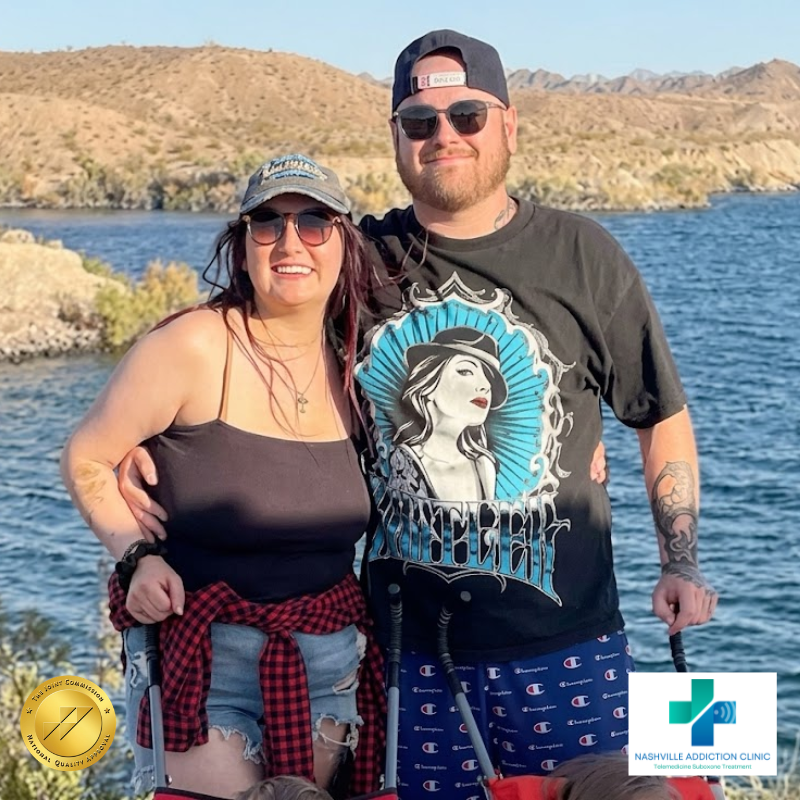
She had never taken kratom before. She wasn’t misusing anything. She bought a gummy supplement at a gas station for leg pain — because it was on the shelf, it looked safe, and everyone seemed to know what kratom was.
One week later, her husband found her unresponsive in bed.
Amanda Goodsell, a 27-year-old Arizona mother of twins, went into cardiac arrest and was placed on life support after roughly a week of taking an over-the-counter kratom gummy, according to her family’s account reported by Arizona’s Family and Gray News. Doctors initially believed she would need a heart transplant. Her heart eventually recovered enough to avoid one — but she will need a defibrillator and heart medication for the rest of her life.
Her husband, who had suggested she try the supplement, now tells anyone who will listen: give it up — it’s not worth it.
For Tennesseans, this story lands differently than it might have a year ago. As of July 1, 2026, kratom and 7-hydroxymitragynine (7-OH) are illegal in Tennessee under Matthew Davenport’s Law. But thousands of Tennesseans used these products right up until the ban — and many are still feeling the effects today.
Kratom & 7-OH Addiction Treatment for Tennessee by Tennesseans in Recovery
Nashville Addiction Clinic provides evidence-based Suboxone treatment through secure telemedicine, staffed by licensed Tennessee clinicians. No clinic visits required, ever.
- Statewide access across Tennessee
- Accredited by The Joint Commission
- Owned and managed by people in long-term recovery
Register for treatment online using your TennCare Medicaid, commercial insurance, or choose a payment plan. (A sliding-scale program is also available.) Click here if you’re a returning patient.
The Part of Amanda’s Story That Should Worry Every Kratom User
The most unsettling detail in Amanda Goodsell’s story isn’t the life support. It’s the week.
She wasn’t a long-term user. She hadn’t built up a habit. Her family says she took a legally purchased, over-the-counter gummy for seven days — and nearly lost her life.
Kratom products are often used to self-treat pain, anxiety, depression, and opioid withdrawal, according to the FDA. In rare cases, kratom has been tied to serious harms, including cardiac arrest, seizures, and liver toxicity. At higher doses, kratom produces opioid-like effects — which is why it has earned the nickname “gas station heroin.”
Two things make today’s kratom marketplace especially unpredictable:
- Concentration. Modern gummies, tablets, and shots can contain far higher levels of active alkaloids — especially 7-OH, which is significantly more potent than the plant’s primary compound, mitragynine.
- Inconsistency. Potency can vary dramatically between brands and even between batches, so a “normal” dose from one package may be a dangerous dose from another.
A gummy on a gas station shelf looks like a candy-aisle supplement. Chemically, a concentrated 7-OH product behaves much more like an opioid.
From Arizona’s Gas Stations to Tennessee’s Ban
At the time of Amanda’s hospitalization, kratom was legal and regulated in Arizona under that state’s Kratom Consumer Protection Act. Tennessee took a very different path.
Tennessee lawmakers passed HB1649/SB1656 — Matthew Davenport’s Law — named for a 27-year-old Chattanooga resident who died in 2024 after a lethal interaction involving kratom. The law was signed by Governor Bill Lee on May 7, 2026, and took effect July 1, 2026, making Tennessee one of only a handful of states to fully ban kratom and 7-OH.
Under the law now in effect:
- The sale, possession, manufacture, and distribution of kratom and its key alkaloids — including 7-OH — are illegal statewide
- Possession is a Class A misdemeanor
- Manufacturing, delivering, or selling carries felony penalties
Two 27-year-olds. Two families forever changed by a product sold next to the energy drinks. Amanda Goodsell survived; Matthew Davenport did not. Tennessee’s law exists so fewer families have to find out which outcome they’ll get.
The Problem the Ban Didn’t Solve: Dependence
Here’s what a ban cannot do: it cannot switch off the physical dependence that regular kratom and 7-OH use creates.
Because kratom’s alkaloids act on the brain’s opioid receptors, regular use — especially of high-potency extracts and 7-OH products — can lead to tolerance, dependence, and genuine opioid-type withdrawal. Since July 1, Tennesseans who relied on these products have faced their supply disappearing almost overnight. Many are now experiencing:
- Anxiety, irritability, and restlessness
- Muscle aches and body pain
- Nausea and stomach distress
- Insomnia
- Intense cravings
Some are tempted to turn to riskier alternatives — street opioids, unregulated online products, or out-of-state purchases that now carry legal consequences. There is a far safer path.
Frequently Asked Questions
Can kratom really cause heart problems?
Serious cardiac events tied to kratom are considered rare, but they have been documented — the FDA notes kratom has been associated with cardiac arrest, seizures, and liver toxicity in some cases. Amanda Goodsell’s family reports she suffered heart failure after about one week of use and will need a defibrillator and heart medication permanently. The unpredictable potency of concentrated products is part of what makes the risk difficult to gauge.
Is kratom still legal in Tennessee?
No. As of July 1, 2026, all forms of kratom — powder, capsules, teas, extracts, shots, and 7-OH products — are illegal to sell, possess, or distribute in Tennessee under Matthew Davenport’s Law.
I was using kratom or 7-OH before the ban. What should I do?
Don’t try to white-knuckle withdrawal alone, and don’t replace kratom with a riskier substance. Because kratom acts on opioid receptors, medication-assisted treatment (MAT) with buprenorphine-based medications like Suboxone® can stabilize those same receptors, dramatically reducing withdrawal symptoms and cravings while you transition off safely.
Will I get in trouble for asking a doctor for help?
No. Seeking medical treatment for kratom or 7-OH dependence is not a crime — and your care at Nashville Addiction Clinic is confidential and HIPAA-protected. Our providers treat kratom dependence every week, without judgment.
Can I get treatment if I live in a rural part of Tennessee?
Yes. Our program is 100% telemedicine, so you can complete every appointment from home — whether you’re in Nashville, Cookeville, Savannah, or anywhere else in Tennessee.
Treatment for Kratom & 7-OH Dependence That Actually Works
Nashville Addiction Clinic has been treating kratom and 7-OH addiction with Suboxone since 2024 — well before the ban made headlines. Our clinicians understand that many patients started with something that seemed harmless: a gummy for pain, a shot for energy, a tablet to take the edge off.
Through secure telemedicine visits, our patients:
- Meet with a licensed Tennessee provider from home
- Receive a personalized treatment plan
- Begin buprenorphine-based treatment the same day, when appropriate
- Get ongoing follow-up, counseling, and support
For many patients, treatment means the withdrawal symptoms that felt impossible become manageable within days.
Why Choose Nashville Addiction Clinic for Online Kratom Addiction Treatment?
- Accredited by The Joint Commission
- Treating kratom addiction with Suboxone since 2024
- Our clinic owners are in long-term recovery
- Over 260 Google Reviews (from real patients)
- Recipient of Tennessee’s first Virtual OBOT medical license
- Same-day Suboxone prescriptions
- Statewide winner of the 2025 Best of Tennessee award for substance abuse treatment
- Accepts most commercial plans — BCBS, Cigna, Ambetter, United Healthcare — plus all TennCare Medicaid plans
- Overnight Suboxone delivery available in most areas (a delivery fee applies)
- Same-day appointments Monday–Friday, 8:00 AM–5:00 PM, with evening appointments Mondays and Wednesdays until 9:00 PM
Register Today for Kratom/7-OH Telemedicine Addiction Treatment
- Register with your TennCare Medicaid (treatment and medication typically $0)
- Register with your commercial insurance
- No insurance? Register and make payments
- Apply for our Sliding-Scale Program
- Returning patient? Start here
Same-day appointments and Suboxone prescriptions are often available when fully registered before 10:00 AM Central Time (based on availability).
Call or text us at (615) 927-7802, or message us securely on the Spruce Health mobile app.
The Bottom Line
Amanda Goodsell’s family thought a gas-station gummy couldn’t hurt her. A week later, she was on life support. Matthew Davenport’s family learned an even harder version of the same lesson — and Tennessee’s law now bears his name.
If kratom or 7-OH has a hold on you or someone you love, the ban didn’t leave you without options. It made the safest option — confidential, medically supervised treatment from home — the clearest one.
More Kratom Addiction Articles
- Kratom & 7-OH Addiction: Causes, Risks, and How Suboxone Treatment Can Help
- 7-Hydroxymitragynine Withdrawal: A Safe Path to Recovery in Tennessee
- Kratom Withdrawal: Safe, Virtual Recovery Options in Tennessee
Source: Family account reported by Arizona’s Family (AZFamily) / Gray News, July 2026. Suboxone® is a registered trademark of Indivior UK Limited.
Recent Posts
- Online Fentanyl Addiction Treatment for Tennessee Residents
- UnitedHealthcare Medicare Advantage Accepted at Nashville Addiction Clinic
- She Took Kratom for One Week — and Ended Up on Life Support: What Her Story Means for Tennessee
- Symptoms of Kratom Withdrawal: Safe, Virtual Recovery in Tennessee
- Help for Kratom Addiction: Virtual Treatment That Works in Tennessee
Recent Comments